

Table of Contents
- What Coffee Transparency Actually Means
- The Farm-to-Cup Journey and Its Impact on Taste
- How to Read a Coffee Transparency Report
- Traceability, Quality Control, and Bean Integrity
- Benefits of Direct Trade Coffee for Flavor and Ethics
- How to Buy Ethically Sourced Coffee Beans Online
- The Sensory Connection: Transparency's Role in Your Cup
- Frequently Asked Questions
Last Updated: September 21, 2026
What Coffee Transparency Actually Means
Coffee transparency is the practice of disclosing detailed information about a coffee bean's origin, processing methods, and supply chain journey from farm to your cup. It means knowing not just which country your coffee comes from, but which specific farm, at what altitude it was grown, how it was harvested, and who handled it at every step.
True transparency reveals the cultivar, processing method, farmgate price, and roaster's quality standards, letting you make informed choices based on facts rather than marketing.
Supply chain clarity directly affects flavor quality. A coffee like our Whiskey Barrel Aged delivers a different sensory experience than commodity coffee because every step is documented and controlled.

The Farm-to-Cup Journey and Its Impact on Taste
Each decision point affects flavor: peak-ripeness cherries taste different from early or overripe ones. Processing method, fermentation duration, sun-drying, or water channels, introduces distinct flavor compounds that roasting cannot replicate.
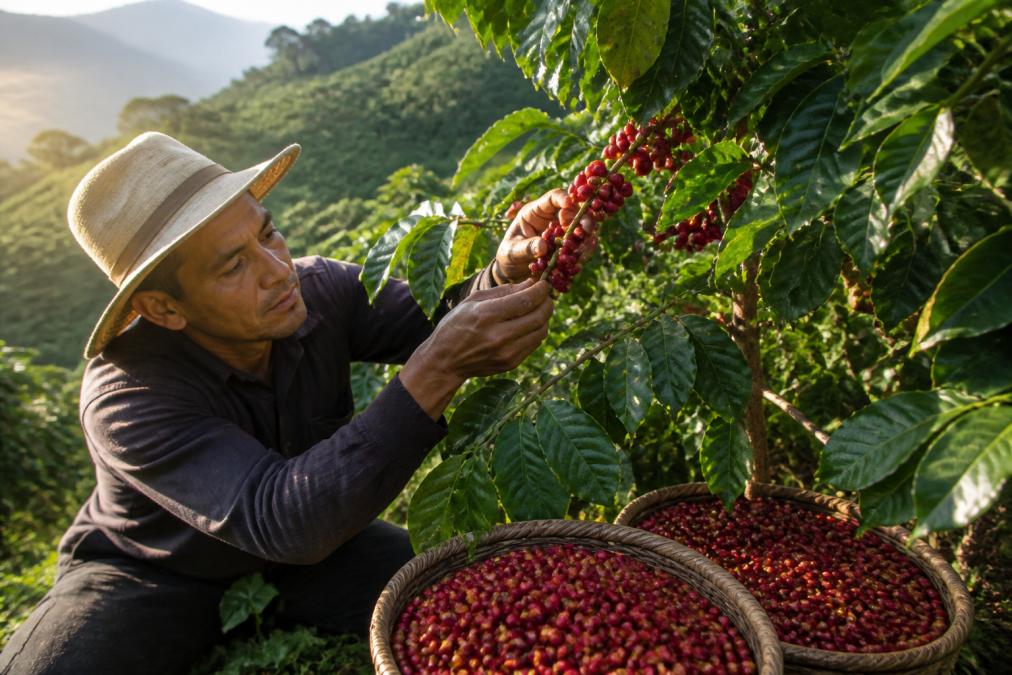
Storage conditions, temperature, humidity, handling speed, preserve or degrade flavor potential. A bean shipped quickly in controlled conditions tastes different from one sitting in a humid warehouse for months.
A roaster knowing exact origin, altitude, and processing can dial in the roast profile for that bean's characteristics. Commodity roasters use generic profiles. Single-origin, traceable coffee consistently outperforms commodity options in blind tastings.
Direct roaster-producer relationships create accountability. When a roaster can discuss harvest variations with the farmer, adjustments happen. Anonymous middlemen eliminate responsibility for quality.
How to Read a Coffee Transparency Report
A transparency report should answer: Where exactly was it grown? Who grew it? How much were they paid? What processing method? When harvested and roasted? You also need to interpret what you find and recognize what's missing.
Origin Information: Beyond the Region Name
Start with farm name, region, and altitude. Higher elevations produce slower-ripening beans with more complex flavors. A coffee from 1,200 meters tastes noticeably different from one at 1,800 meters, even from the same region.
Strong reports list farm name, district, and elevation. Look for GPS coordinates or landmarks. "Ethiopia" or "Central America" alone is not transparency, it's the bare minimum for "single-origin." The SCA defines single-origin as a single country, but transparency demands far more specificity.
If a report lists multiple farms, ask: Are they in the same microregion with similar altitude, or scattered across different elevations? A transparency report should list each farm separately or explain why they're blended.
Processing Method: The Chemical Signature
Next, check the processing method. Natural processing creates fruity, full-bodied notes through fruit fermentation. Washed processing emphasizes origin characteristics and acidity by removing fruit before fermentation. Honey processing, with some mucilage remaining, creates sweetness and body between the two.
Reports lacking processing method details are incomplete. Crucial details include fermentation time (24 vs. 72 hours produces different flavors), drying method, and target moisture content. Some roasters include fermentation temperature ranges, which directly affect flavor.
Pricing and Producer Compensation: The Numbers That Matter
Look for pricing information. Fair trade guarantees a minimum price (currently $2.30 per pound for washed arabica as of 2024), but direct trade often pays more. Actual farmer payment per pound reveals whether "ethical sourcing" is real or marketing.
A transparent report should list farmgate price, export price, and ideally roaster's cost, showing margins at each step. Farmers receiving fair compensation can invest in quality and sustainability. A farmer at $1.50/lb cannot afford selective harvesting; one at $4.00/lb can.
Prices fluctuate with global markets. Look for reports explaining context: Was this a premium harvest? Did the processing method command higher prices? Did the roaster pay above-market rates?
Harvest Date and Roast Date: Freshness and Intentionality
Check harvest date and roast date. Coffee loses flavor immediately after roasting; coffees roasted more than four weeks ago lose volatile aromatic compounds. Harvest date matters: January and June harvests taste different due to seasonal rainfall and temperature variations.
Roast level should match the bean's origin and processing. East African naturals express fruity notes best as light roasts; Brazilian naturals develop chocolate and nutty notes in medium-dark roasts. Specifying roast level shows intentional choice based on bean characteristics.
Putting It Together: A Transparency Report Checklist
Use this framework: (1) Origin, farm name, region, altitude, microregion; (2) Processing, method, fermentation time, drying method, moisture content; (3) Pricing, farmgate price, export price, roaster's cost; (4) Dates, harvest and roast dates; (5) Roasting, roast level and reasoning; (6) Quality metrics, SCA score, defect rate, or tasting notes. Six categories = genuine transparency. Three to four = partial. One to two = marketing.
Traceability, Quality Control, and Bean Integrity
Traceability means following a specific lot backward to its source and forward to your cup, requiring documentation at every step. When traceability breaks down, quality control becomes impossible.
Quality control starts at the farm with selective harvesting of ripe cherries. Processing control means monitoring fermentation times, drying temperatures, and moisture levels. Beans dried too quickly become brittle; too slowly develop mold.
Bean integrity refers to physical condition and composition. Cupping notes, professional tasting assessing flavor, acidity, body, and aftertaste, provide objective quality data.
Defect rates matter. Transparent roasters disclose acceptable defect rates and often hand-sort beans to remove defects before roasting. This labor-intensive process is expensive, which is why high-quality coffee costs more than commodity options.
Benefits of Direct Trade Coffee for Flavor and Ethics
Direct trade eliminates middlemen and creates accountability. Roasters can specify cultivar, processing method, and harvest window. This control produces consistency and quality impossible in commodity supply chains.
Direct trade means better prices for producers. Without exporters and importers taking margins, more money reaches farmers, enabling investment in better practices and equipment. Farmers benefit economically; consumers benefit through superior flavor.
Direct trade enables feedback loops. Roasters can discuss substandard batches with producers and adjust next year's process. This continuous improvement cycle drives specialty coffee's reputation for quality. Commodity chains lack this mechanism.
Direct trade enables verification of sustainability practices: shade-grown methods, water source protection, and soil health. Marketing claims mean nothing without verification; direct relationships enable it.
How to Buy Ethically Sourced Coffee Beans Online
Identify what "ethically sourced" means to you. Fair trade guarantees minimum prices but not exceptional flavor. Direct trade prioritizes quality and fair compensation but varies widely. Know your priorities before shopping.
Look for roasters publishing transparency reports on their website. If you must email asking origins, that's a red flag. Transparency shouldn't require detective work.
Check roast dates. Subscription models deliver fresh coffee regularly, ensuring peak freshness.
Read tasting notes carefully. Specific notes like "bright citrus acidity" or "chocolate body" describe actual compounds. Generic descriptions like "smooth" tell you nothing. Specific notes indicate roaster expertise.
Buy small quantities first to evaluate quality. Once confirmed, subscription models often provide better pricing than one-off purchases.
Pure Brew Coffee offers specialty-grade options like our Coffee with Mushrooms Dark Roast, combining traceable single-origin beans with functional ingredients. Our flavored options, including Dubai Chocolate and Smores, use single-origin coffee as their base.


The Sensory Connection: Transparency's Role in Your Cup
When you know exactly where your coffee came from and how it was processed, you're tasting the direct chemical result of those supply chain decisions. Why coffee transparency matters for flavor: every step either preserves or degrades the specific compounds that create taste.
How Altitude Shapes Flavor Compounds
High-altitude beans develop more slowly, accumulating more sugars. During roasting, these sugars undergo Maillard reaction and caramelization, creating caramel notes, chocolate undertones, and complex sweetness.
Altitude specifies flavor intensity. Specialty roasters consider elevation data because it's a chemical indicator about what's in the bean.
Low-altitude coffees develop fewer sugars and more chlorogenic acid, creating sharper, vegetal notes. Transparent supply chains documenting altitude let roasters adjust profiles accordingly.
Processing Method and Fermentation Chemistry
Processing method determines which microorganisms and enzymes interact with the bean, fundamentally altering its chemistry before roasting even begins.
In natural processing, the cherry ferments intact for days or weeks. Wild yeasts and bacteria produce organic acids, alcohols, and esters, compounds creating fruity, wine-like notes.
Washed processing removes fruit before fermentation, so the bean ferments in water channels with different microbes. This reduces fruity esters and emphasizes inherent sugars and acids.
Honey processing leaves some fruit mucilage on the bean during drying, creating hybrid fermentation.
Drying Speed and Moisture Development
Drying speed affects moisture distribution and flavor stability.
Roast Profile Matching and Flavor Expression
The Transparency-Flavor Chain: From Farm Decision to Your Palate
Frequently Asked Questions
What does coffee transparency actually tell you about flavor?
Coffee transparency reveals the origin, processing method, and handling practices that directly shape taste. When you know the cultivar, altitude, and post-harvest processing method, you can predict flavor notes like acidity, body, and sweetness. Transparency reports show whether beans were dried naturally (fruity notes) or washed (cleaner taste). This traceability lets you match beans to your brewing method and taste preferences, transforming coffee from a commodity into a traceable, intentional choice.
How does direct trade coffee differ from fair trade?
Direct trade coffee involves roasters buying straight from producers, eliminating middlemen and ensuring producers receive fair compensation directly. Fair trade uses third-party certification but may still include intermediaries. Direct trade typically offers better pricing transparency and stronger producer relationships, which often translates to higher quality control and more consistent flavor profiles. The direct relationship also means roasters can request specific processing methods or cultivars, giving them, and you, more control over the final sensory experience.
What information should you look for in a coffee transparency report?
Look for origin (country, region, farm name), elevation, cultivar variety, harvest date, processing method (washed, natural, honey), and roast date. The report should include farmgate price or FOB pricing to show fair compensation. Tasting notes and expected flavor characteristics help you understand what to expect. Some transparency reports also detail the roaster's quality control standards and certifications. This data transforms abstract 'ethical sourcing' into concrete proof that your coffee was sourced responsibly and roasted with intention.
Why does supply chain transparency cost more?
Transparency requires direct relationships with producers, detailed tracking systems, and third-party verification. Roasters must invest in traceability infrastructure, communicate directly with farms, and often pay premium prices to ensure fair compensation. These costs are passed to consumers, but they fund better working conditions, sustainable practices, and quality control that directly improve flavor. Premium beans like Pure Brew's specialty offerings reflect this investment in both ethics and sensory excellence, making the higher price point a reflection of genuine value rather than brand markup.