

Table of Contents
- Why Track Coffee Beans to Their Farm
- Understanding Coffee's Journey from Farm to Cup
- How to Verify Coffee Origin Through Labels and Lot Numbers
- Reading Coffee Lot Number Traceability Information
- Questions to Ask Coffee Roasters About Sourcing
- Understanding Farm-Direct Coffee Meaning and Supply Chain
- Practical Tools and Records for Tracing Your Beans
- Limits of Traceability and How to Assess Claims
- Frequently Asked Questions
Last Updated: October 14, 2026
Why Track Coffee Beans to Their Farm
When you track coffee beans farm to source, you verify quality at its origin, confirm ethical sourcing claims, and understand why two identically roasted bags taste different.
Most drinkers trust a "single-origin" or "fair trade" label, but traceability, following a bag back to the exact farm, lot, and harvest, separates marketing from proof.
At Pure Brew Coffee, transparency starts with knowing every bean's origin. This guide shows you how to do the same with any coffee you buy.
Understanding Coffee's Journey from Farm to Cup
Coffee travels through multiple stages, each affecting flavor, quality, and traceability.
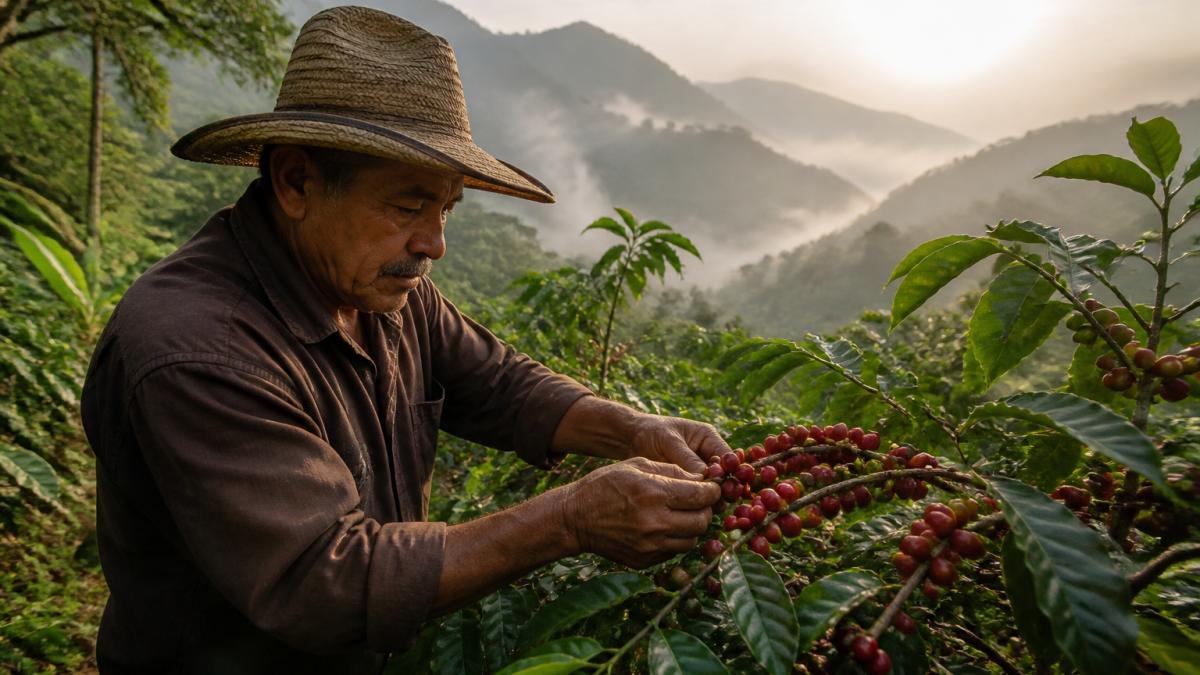
It starts with cultivation. Coffee grows best at high altitude in volcanic soil with specific rainfall and shade.
Harvest comes next: hand-picking selects only ripe cherries, while strip-picking is faster but takes everything, including underripe fruit.
After harvest, the cherry must be processed. The processing method determines how much of the fruit stays in contact with the bean during drying:
- Washed process: The fruit is removed immediately, the bean is fermented and washed. This produces cleaner, brighter flavors.
- Natural process: The entire cherry dries with the bean inside. This produces fruitier, fuller flavors.
- Honey process: Part of the fruit stays on during drying. This creates balanced, complex flavors.
Once dried, beans are milled, sorted by size and density, and graded for defects.
How to Verify Coffee Origin Through Labels and Lot Numbers
Start with what's on the bag. Not every label field carries the same weight, some are verifiable, some are decoration.
High-value fields (specific and checkable):
- Farm or cooperative name: A named producer or co-op is the single strongest signal. "Finca El Injerto" or "Kintamani Smallholder Cooperative" can be looked up. "South American blend" cannot.
- Region and sub-region: The narrower the better. "Huila, Colombia" beats "Colombia"; "Kintamani, Bali" beats "Indonesia."
- Lot or batch code: Your key to deeper records. More on this below.
Low-value fields (vague or unverifiable):
- "Single-origin" with no country, region, or farm
- "Mountain grown" or "high altitude" with no number
- "Hand-picked" with no farm name attached
- "Direct trade" with no named producer
A bag can carry every low-value phrase and still be untraceable; a farm name, region, harvest year, and lot code does real work.
How to read a lot code
A lot number is typically printed as numbers, letters, or both, "LOT-2026-0847" or "BATCH-KIN-001." There is no universal format, so it isn't decodable without the roaster's key. What matters is that it exists and maps to a specific lot.
When you contact the roaster, ask them to decode the code for you. A useful response names:
- The farm or cooperative
- The region and country
- The harvest year or season
- The processing method
If the roaster can only tell you the country, the code is not doing much work. If they can name the farm and harvest, it is.
When there's no lot code
Many bags, especially grocery-store and commodity blends, carry no lot code. That's not automatically a scandal, since blends are assembled from multiple lots and origins. But it does mean you cannot trace that bag to a farm.
If a bag claims a single farm but has no lot code, ask why. Often the roaster buys through an importer who holds the records and never asked for them, a fixable gap, if the roaster is willing.
QR codes and digital traceability pages
Many roasters print a QR code linking to a traceability page. A useful page shows the farm name, region, harvest, processing method, and often photos of the producer or mill; some show the chain of custody.
A QR code leading to a brand homepage, tasting-notes page, or marketing video is packaging, not traceability. The test: does the page name a specific farm and harvest?
Reading Coffee Lot Number Traceability Information
Once you have the lot number, contact the roaster or importer and ask for the traceability record for that specific lot. A complete record includes:
- Farm name and location
- Farmer or cooperative name
- Harvest date or season
- Processing method used
Digital traceability is becoming standard at specialty roasters. If a roaster has no QR code or traceability record for a lot number, that's a red flag, they can't verify where the coffee came from.
Questions to Ask Coffee Roasters About Sourcing
Ask the roaster directly, their answers reveal how much they know about their supply chain and how much they'll prove. Ask in writing; email answers are easier to compare and harder to walk back.
Questions that test whether a farm-level record exists
"Can you name the farm or cooperative, the region, and the harvest year for this lot?"
A specific answer, "Finca La Esperanza, Huehuetenango, 2025-2026 harvest", means a record exists.
"What is the lot code on this bag, and what does it map to?"
Ask them to decode it. The code should resolve to a specific lot, not a category.
"Who was the importer or exporter, and can you share the chain-of-custody record?"
Questions that test whether the claim is verified or asserted
"Is this lot mass-balance or fully segregated?"
This is the single most important question for assessing a traceability claim, and almost no consumer-facing guide asks it.
- Fully segregated (identity preserved): The beans in the bag come only from the named farm or co-op, kept separate from planting through roasting. This is the strongest claim.
- Mass balance: The roaster or importer buys a volume of certified or traceable coffee, mixes it with conventional coffee of the same type, then sells the total as traceable. The farm name may be real, but the beans in your bag may not all come from that farm.
"What certifications does this coffee carry, and who audits them?"
Organic, Fairtrade, and Rainforest Alliance use third-party auditors; "direct trade" is not a certification and has no auditor.
"How much of the retail price reached the farmer?"
Many specialty roasters publish a farmgate price or price-per-pound paid to the producer.
The records checklist
If a roaster claims farm-level traceability, these are the records that back it up. Ask for them by name:
- Farm or cooperative name and location
- Producer name (individual farmer or co-op)
- Harvest year or season
- Lot code and the roaster's internal mapping to it
You'll rarely get all of these. The point is how far down the list a roaster can go: the first six is more than most.
Red flags
- A farm name on the bag but no lot code
- A lot code the roaster cannot decode
- "Direct trade" with no named producer
- A QR code that leads to a brand homepage rather than a farm record
What traceability does not prove
Even a complete record has limits. Traceability proves origin, not fair wages, safe labor conditions, or sound environmental practices. A fully segregated, fully documented lot can still come from a farm with poor labor practices. That's why traceability is a starting point, not a verdict: use it alongside certifications, published price data, and direct information from the roaster or co-op.
Understanding Farm-Direct Coffee Meaning and Supply Chain
Farm-direct coffee is bought straight from the farmer or a cooperative, cutting out middlemen. A traditional chain runs farmer → exporter → importer → roaster → you, each step taking a cut.
Fewer middlemen means:
- Better prices for farmers. More of the purchase price reaches the person who grew the coffee.
- Better traceability. Fewer hands touching the coffee means fewer places for information to get lost.
- Better quality control. Direct relationships let roasters work with farmers on harvest timing, processing, and drying methods.
Farm-direct doesn't always mean the cheapest coffee, it means the roaster invested in a direct relationship with a specific farm or cooperative. At Pure Brew Coffee, our Bali Blue comes from smallholder farmers in the Kintamani region and our Colombia from smallholder farmers in Medellin.

Practical Tools and Records for Tracing Your Beans
You don't need special tools to track coffee beans farm records, just the right documents and questions. Request and review:
From the roaster:
- Traceability record for the lot number
- Farm name and location
- Farmer or cooperative name
- Harvest date or season
From the importer (if you're buying green coffee):
- Export documentation showing farm origin
- Processing records
- Inspection and grading results
- Shipping records
Digital tools:
- QR codes on bags linking to traceability pages
- Roaster websites with farm profiles
- Cooperative websites listing their members and harvests
Direct contact:
- Email the roaster and ask for traceability details
- Some roasters publish farmer contact information, reach out directly if they do
Many specialty coffee websites include farm profiles with photos, harvest details, and tasting notes. Use these as a starting point, then ask the roaster for the official traceability record.
Limits of Traceability and How to Assess Claims
Traceability is powerful but limited. It proves origin, not ethical sourcing, fair wages, or environmental sustainability.
What "fair trade" and "direct trade" actually mean:
Fair trade is a third-party certification guaranteeing minimum prices and working conditions, but it involves middlemen and certification fees some farmers and roasters reject.
Direct trade is not a formal certification, just a claim that the roaster buys directly from the farmer at a negotiated price.
How to assess these claims:
Ask the roaster to show the price paid to the farmer, reputable specialty roasters publish it, and refusal is telling.
Red flags:
- A roaster claims direct trade but won't name the farm
- No lot number on the bag
- No traceability record available
- Vague answers about price paid to farmers
Knowing where your coffee comes from transforms how you drink it. Our Colombia is fully traceable to smallholder farmers in Medellin. Our Bali Blue comes from specific growers in Kintamani, hand-picked and wet-hulled. When you join our newsletter, you'll have access to detailed traceability for every bag. Learn more about specialty coffee sourcing standards.

Frequently Asked Questions
How can you trace coffee beans back to the farm?
Start by checking the bag's origin label for the farm name, region, and altitude. Look for a lot number or batch code, then contact the roaster to request traceability records including the importer, exporter, and farm details. Many specialty roasters now provide QR codes on bags that link to supply-chain data. Ask your roaster for documentation of the chain of custody from harvest through export and import to their facility.
What information should a traceable coffee label include?
A traceable label should list the specific farm or cooperative name, the region and country of origin, altitude where beans were grown, harvest season, the processing method used (washed, natural, or honey process), and ideally a lot or batch number. It should also identify the variety of coffee plant (Bourbon, Typica, Catimor, etc.) and the roast date. This information allows you to verify the bean's journey and assess its quality based on known factors like altitude and processing.
What is the difference between farm-direct and traceable coffee?
Farm-direct coffee means the roaster sources directly from a specific farm or cooperative, eliminating intermediaries and typically ensuring better payments to farmers. Traceable coffee provides documented proof of origin but may have passed through multiple buyers and exporters. Farm-direct is a subset of traceable coffee, all farm-direct relationships should be traceable, but not all traceable coffee is farm-direct. Farm-direct often offers greater transparency and stronger farmer relationships.
How do coffee roasters verify a bean's farm of origin?
Roasters verify origin through export documentation, import records, and direct relationships with farms or importers. They request certificates of origin, cupping notes from the farm, and lot-specific details. Many visit farms or work with importers who maintain chain-of-custody records. Quality roasters can describe the farm's altitude, soil composition, and processing methods because they've researched their sourcing. Ask your roaster if they've visited the farm or can provide importer contact information as verification.