

Table of Contents
- Why Coffee Bean Freshness Matters for Your Brew
- Understanding the Coffee Bloom Test
- Visual Inspection: What Fresh Beans Look Like
- The Aroma and Smell Test
- The Ziplock Bag Gas Test for Degassing
- Coffee Roast Date vs Expiration Date
- How to Store Coffee Beans for Maximum Freshness
- Signs Your Coffee Has Gone Stale
- Frequently Asked Questions
Last Updated: September 23, 2026
Why Coffee Bean Freshness Matters for Your Brew
Fresh coffee beans are the foundation of every exceptional cup. The moment beans are roasted, they begin losing flavor compounds and aromatic qualities. Understanding how to verify coffee bean freshness ensures you're brewing with beans at their peak.
At Pure Brew Coffee, we know that freshness directly impacts extraction, acidity, and the full sensory profile of your coffee. A stale bean produces flat, muted flavors no matter how skilled your brewing technique. Fresh beans unlock the complexity and brightness that make specialty coffee worth the investment.
The difference between fresh and stale isn't subtle. Fresh beans release carbon dioxide during brewing, a process called degassing, that creates the bloom and extracts the full range of flavor notes. Stale beans have already lost most of their gases and oils, leaving you with a disappointing cup.
Understanding the Coffee Bloom Test
The bloom test is one of the most reliable ways to assess freshness. When you pour hot water over fresh coffee grounds, they expand and release carbon dioxide. This visible reaction tells you the beans still contain volatile compounds and are worth brewing.
What the Bloom Reveals About Freshness
The bloom indicates active degassing, which only happens with fresh beans. Freshly roasted coffee continues releasing CO2 for days or weeks after roasting. When you see grounds rise and bubble during the bloom phase, you're witnessing proof that flavor compounds are still present in the beans.
A vigorous bloom means your beans are likely within the optimal freshness window. A weak or nonexistent bloom suggests the beans have aged beyond their peak. The visual reaction directly correlates with how much aromatic complexity remains locked in the beans.
Stale beans produce little to no bloom because they've already lost most of their carbon dioxide. The grounds may still absorb water, but without the gas release, extraction becomes incomplete and flavors come out flat.
Step-by-Step Bloom Test Instructions
Follow these steps to perform a proper bloom test:
-
Grind your beans fresh, Use a burr grinder set to a medium-coarse size, similar to sea salt. Grinding immediately before brewing preserves volatile compounds.
-
Heat water to 195-205°F, Use a thermometer or let boiled water cool for 30 seconds. Water that's too hot burns the grounds; too cool won't extract properly.
-
Add grounds to your dripper or cup, Use a 1:16 coffee-to-water ratio as a baseline (1 gram coffee to 16 grams water).
-
Pour just enough hot water to saturate the grounds, Use about twice the weight of your dry grounds. For example, if you have 20 grams of coffee, pour 40 grams of water.
-
Watch for 30-45 seconds, Fresh beans will rise noticeably and bubble. You may hear a soft crackling sound as gases escape.
-
Observe the intensity, A dramatic rise indicates very fresh beans. A modest rise suggests beans are still good but approaching the end of their peak window. No visible rise signals stale beans.
-
Proceed with brewing, After the bloom settles, pour the remaining water and brew normally.
The bloom test takes less than a minute and requires no special equipment beyond hot water and a grinder. It's the fastest way to gauge whether your beans are worth brewing.
Visual Inspection: What Fresh Beans Look Like
Appearance tells you a lot about how long ago beans were roasted. Fresh beans have distinct visual characteristics that fade as they age.
Oiliness, Color, and Chaff as Freshness Indicators
Fresh roasted beans display a glossy, oily surface that indicates strong flavor compounds still present. Light roasts show less oiliness but should still have a subtle sheen. Medium and dark roasts develop visible oils as the roasting process brings oils to the surface.
The glossy appearance comes from lipids and volatile compounds migrating to the bean surface. As beans age, these oils oxidize and the surface becomes dull and matte. A completely matte finish suggests the beans have been sitting for weeks or months.
Color variation across individual beans indicates even roasting and freshness. Look for consistent brown tones without large patches of gray or faded areas. Uneven coloring can signal either uneven roasting or significant age.
Chaff, the thin papery skin that comes off beans during roasting, should be minimal on fresh beans. A small amount of loose chaff is normal. Excessive chaff clinging to beans or large amounts of chaff dust in the bag suggests either poor roasting or beans that have been handled roughly after roasting.
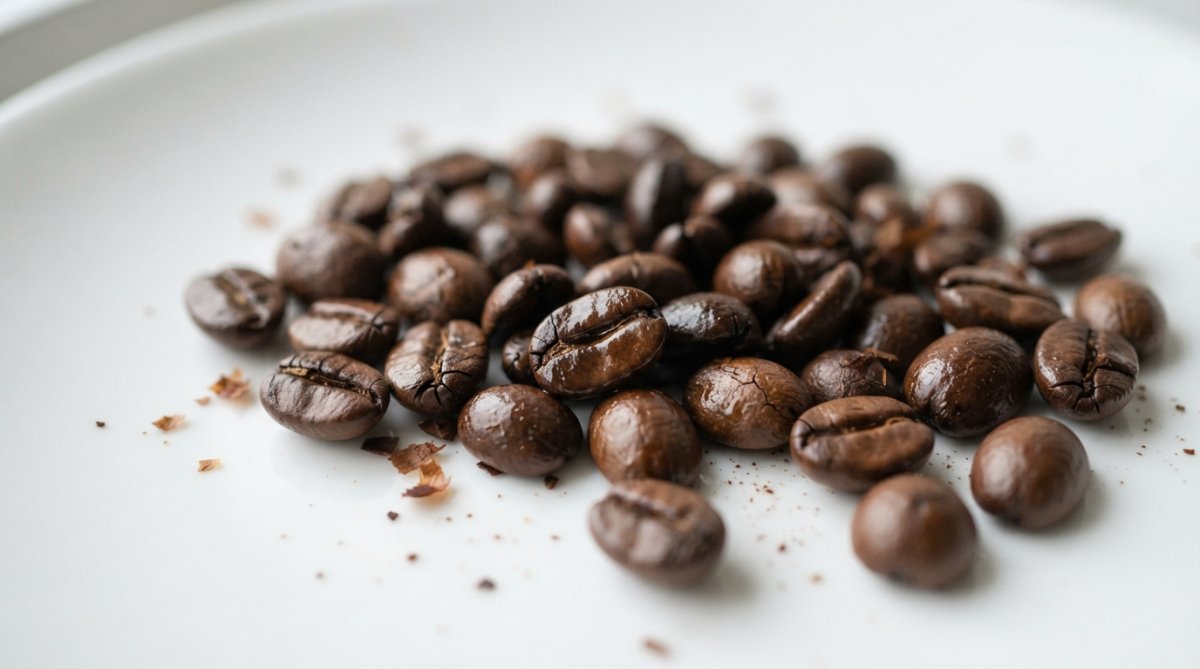
Avoid beans that look gray, dusty, or completely matte. These visual cues indicate oxidation has progressed significantly, and flavor will suffer.
The Aroma and Smell Test
Your nose is one of your most reliable freshness detectors. Fresh coffee has a distinctive, complex aroma. Stale coffee smells flat or even slightly rancid.
Open your bag and smell immediately. Fresh beans release a rich, inviting aroma with notes matching the origin and roast profile. Single-origin beans from different regions have unique scent signatures, Ethiopian beans often smell fruity, Brazilian beans smell nutty, and Central American beans smell balanced and clean.
As beans age, the aroma becomes muted. After several weeks, the smell fades to a generic "coffee" scent without the complexity. If beans smell musty, sour, or rancid, they've oxidized too far and should be discarded.
The aroma test works best immediately after opening a fresh bag. Seal the bag again promptly to preserve remaining volatile compounds. Each time you open the bag, you release gases and expose beans to oxygen, accelerating staling.
The Ziplock Bag Gas Test for Degassing
This simple test reveals whether beans are still actively degassing, a key sign of freshness.
Place a handful of beans in a ziplock bag and seal it. Leave it at room temperature for 24 hours. When you open it the next day, the bag should puff up slightly or feel pressurized. This indicates carbon dioxide is still being released.
A bag that doesn't puff up suggests degassing has largely completed, which may mean the beans are nearing the end of their peak flavor window. The more pronounced the puffing, the fresher the beans.
This test works because freshly roasted beans continue releasing CO2 for days or weeks. As beans age, this degassing slows dramatically. By measuring gas accumulation, you're measuring residual freshness.
The test is most dramatic with beans roasted within the past week. Beans roasted 2-3 weeks ago will show less puffing. Beans older than 4 weeks show minimal to no puffing.
Coffee Roast Date vs Expiration Date
Understanding the difference between roast date and expiration date is critical for making freshness decisions.
Peak Flavor Window After Roasting
The roast date is the most important number on your bag. This tells you exactly when the beans were roasted. The expiration date, if listed, is a conservative estimate of when the beans will become undrinkable, but this doesn't mean they're optimal until that date.
Peak flavor occurs in the 2-4 weeks after roasting for most coffee. During this window, the beans have completed initial degassing but haven't yet lost significant flavor compounds. This is when you'll experience the full complexity of origin characteristics and roast profile.
After 4 weeks, flavor begins declining noticeably.
How to Store Coffee Beans for Maximum Freshness
Storage conditions dramatically impact how long beans maintain their peak flavor. Proper storage slows oxidation and preserves volatile compounds.
Airtight Containers and One-Way Valves
Store beans in an airtight container immediately after opening the bag. Exposure to oxygen accelerates oxidation and staling. Glass jars with rubber seals or plastic containers with tight lids work well.
- Airtight seals that create a vacuum
- Opaque or dark glass to block light
- Small size to minimize headspace (excess air accelerates staling)
- One-way valves if available
Temperature, Light, and Moisture Control
Keep beans in a cool, dark location away from direct sunlight. Heat accelerates chemical reactions that degrade flavor. Store at room temperature or slightly cooler, ideally between 60-70°F.
Signs Your Coffee Has Gone Stale
Recognizing stale coffee helps you avoid brewing with beans that won't deliver the experience you're paying for.
Rancid Odors, Flat Flavor, and Loss of Acidity
Stale coffee often smells musty, sour, or rancid rather than inviting. This indicates oxidation has progressed significantly. The distinctive aroma of fresh beans has been replaced by off-notes from degraded compounds.
Frequently Asked Questions
How do I know if coffee beans are fresh by their roast date?
Fresh coffee reaches peak flavor 5-14 days after roasting, when degassing has stabilized. Check the roast date on the bag, beans roasted within the past 3-4 weeks deliver optimal flavor and aroma. After 30 days, flavor begins declining as oxidation increases. A roast date, unlike an expiration date, tells you exactly when the coffee was roasted, giving you control over freshness rather than relying on a vague shelf-life estimate.
What does the coffee bloom test actually tell you?
The bloom test measures carbon dioxide release when hot water first contacts ground coffee. Fresh beans bloom vigorously, forming a visible dome of foam within seconds; stale beans produce little to no bloom. A robust bloom indicates the beans retain trapped gases from roasting, a reliable sign of recent roasting and proper storage. This sensory evaluation is one of the most practical ways to verify freshness before brewing.
Can I still use coffee beans that are 2 months old?
Coffee beans aged 2 months are typically past their peak flavor window but still drinkable if stored properly in an airtight container. Flavor complexity fades, acidity flattens, and the brew tastes duller compared to fresh beans. For specialty, single-origin beans where you're paying premium prices, beans this old represent diminished value. Whole bean coffee maintains better freshness than pre-ground, but 2 months is approaching the point where oxidation noticeably impacts taste.
What's the best way to store coffee beans to keep them fresh longer?
Store whole beans in an airtight container away from light, heat, and moisture. Vacuum-sealed bags with one-way valves work well for initial storage, but transfer beans to an opaque, airtight container once opened to prevent oxidation and moisture absorption. Keep them at room temperature, freezing can introduce condensation when thawed. Proper storage extends peak flavor by slowing oxidation and moisture damage, preserving the bean's original aroma, body, and flavor notes.