

Table of Contents
- Direct Trade vs Fair Trade Coffee: The Core Difference
- Fairtrade Coffee Certification: Standards, Fees, and Limits
- Farmer Pay and Premiums: Where the Money Goes
- Coffee Supply Chain Transparency and Independent Verification
- Smallholder Farmers, Cooperatives, and Producer Choice
- How to Buy Ethically Sourced Coffee: A Buyer's Checklist
- Conclusion: Which Sourcing Model Fits Your Cup
- Frequently Asked Questions
Last Updated: October 17, 2026
Direct Trade vs Fair Trade Coffee: The Core Difference
Direct trade vs fair trade coffee is the distinction between a certification system that sets a floor price for certified producers and a relationship model where roasters negotiate directly with farms, often paying above market rates without a formal label. Fair trade relies on third-party certification and audits; direct trade relies on the buyer's own transparency and long-term contracts.
This guide from Pure Brew Coffee breaks down the fair trade vs direct trade coffee debate, where the money actually goes, and how to judge sourcing claims before you spend $24.99 on a bag. The stakes are real: the International Coffee Organization has documented how price volatility hits smallholder farmers hardest, and the label on the bag is often the only signal a buyer gets.

Below, we cover certification standards, premium flows, verification gaps, and a checklist for evaluating roaster claims. Most guides get this wrong: they treat fair trade and direct trade as opposites when they are two answers to the same question about farmer compensation.
| Model | How It Works | Verification | Typical Price Floor |
|---|---|---|---|
| Fair trade | Third-party certification, audits, minimum price plus premium | Independent certifier inspections | Set minimum price plus social premium |
| Direct trade | Private negotiation between roaster and producer | Buyer's own reporting and farm visits | No universal floor; varies by contract |
What Fair Trade Certification Actually Requires
Fairtrade coffee certification requires producers to organize into cooperatives or associations, meet environmental and labor standards, and submit to periodic audits by an independent certifier. In exchange, certified coffee carries a minimum price and a development premium paid on top of it. The Fairtrade International standards set the framework, though the exact minimum price and premium amounts are updated periodically and should be checked against the current published schedule rather than assumed.
The model works best for organized producers who can absorb compliance costs. Cooperative members gain collective bargaining power but take on certification fees, record-keeping, and inspections.
What Direct Trade Means in Practice
Direct trade means a roaster buys from a specific farm, cooperative, or producer group through private negotiation, usually with a stated farm-gate price and a multi-year relationship. There is no universal certification body, both the model's strength and its weakness.
What most guides miss is that direct trade is a spectrum, not a standard. Some roasters publish farm-gate prices, visit producers annually, and sign forward contracts. Others use the term loosely for any coffee bought outside a certification program. Specialty Coffee Association resources note that quality-based pricing and traceability are central to how specialty buyers define the model, but enforcement depends entirely on the buyer's own disclosure.
Fairtrade Coffee Certification: Standards, Fees, and Limits
Fairtrade certification operates through a fee-and-audit structure: producers pay certification fees, cooperatives cover inspection costs, and the certifier monitors compliance with labor, environmental, and organizational standards. The minimum price acts as a safety net when the market falls below it; the premium is paid on top and funds community or business projects chosen by the cooperative.
The limits are structural. Certification covers organized producers, so individual smallholders outside a cooperative are largely excluded, and fees and paperwork can be a barrier for the smallest farms. The minimum price is a floor, not a target: it does not rise with a farm's cost of production or the coffee's quality.
Farmer Pay and Premiums: Where the Money Goes
Farmer compensation in both models flows through several hands: farm to cooperative or intermediary, then exporter, importer, roaster, and retailer. Each link takes a margin, and the farm-gate price, what the producer actually receives, is often the smallest share of retail. That is true of every sourcing model. What separates fair trade from direct trade is not whether intermediaries exist, but who sets the price and who can prove it was paid.
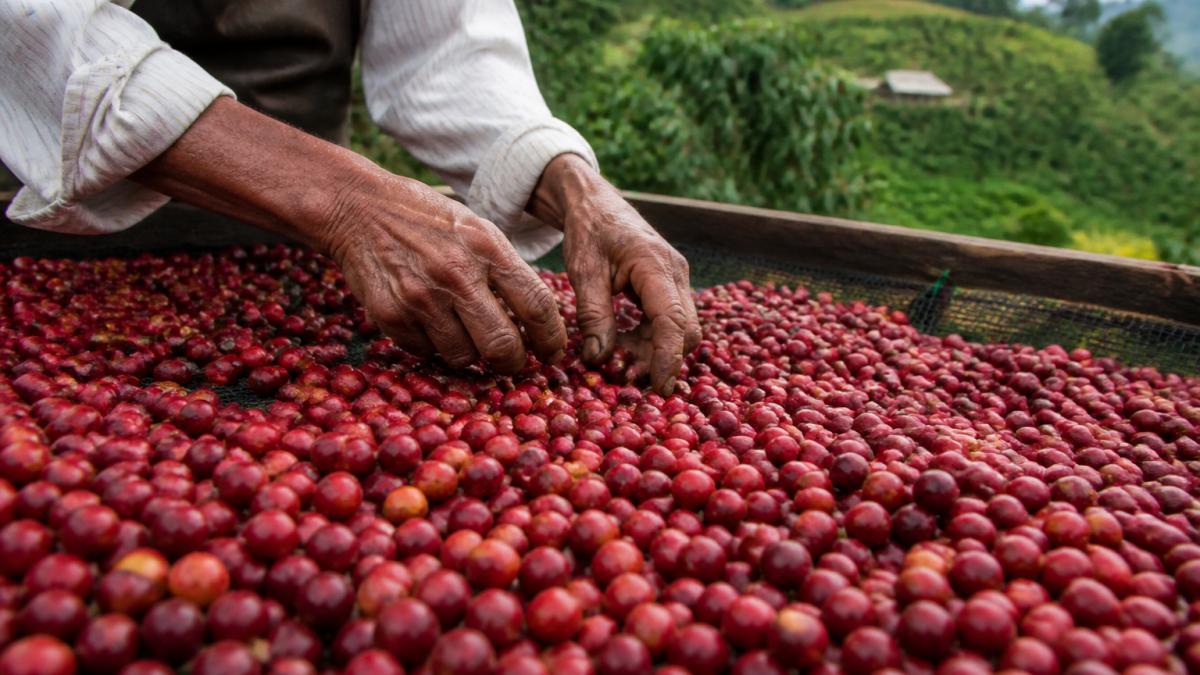
How the Fairtrade Price Floor and Premium Actually Work
Fairtrade coffee pricing rests on two numbers published by Fairtrade International: a Minimum Price that applies when the commodity market falls below it, and a Fairtrade Premium paid on top of whatever price the coffee fetches. The Minimum Price is set per origin and coffee type (washed arabica, natural arabica, washed robusta) and is a floor, not a target. Above the floor, the buyer pays market price plus the Premium; below it, the Minimum Price plus the Premium.
The Premium is the part most buyers misunderstand. It is not paid to individual farmers as cash but to the certified cooperative, which decides collectively how to spend it, typically on infrastructure, training, organic conversion, or community projects. That keeps money inside the producer organization rather than distributing it per bag, but it means the Premium's impact depends on how well the cooperative is governed.
Certification fees flow the opposite direction: producers and their organizations pay for initial certification and annual audits, with costs scaling to operation size. For a small cooperative, those fees and the record-keeping are a real barrier, which is why certification concentrates among organized producers with enough volume to absorb the cost.
How Direct Trade Pricing Is Set
Direct trade has no published floor or premium. The price is whatever the roaster and producer negotiate, usually anchored to one of three things: the commodity market price (often with a stated premium above it), the cup quality score, or the producer's cost of production. A published farm-gate price quotes one of those anchors, and the anchor matters as much as the number.
This is where the models diverge most sharply. In fair trade, the premium is traceable because it is a defined line item paid to the cooperative. In direct trade, the premium is whatever the parties agreed to, and transparency depends on whether the buyer publishes it. A roaster who says "we pay above market" without naming the market reference, harvest date, and price paid has told you nothing verifiable.
The Mechanic Most Guides Skip: Who Captures the Premium
In fair trade, the Premium reaches the cooperative by contract, certifier rules require it to be paid and tracked separately from the coffee price. In direct trade, there is no such rule. If a roaster buys through an exporter or importer rather than the farm, the "direct" premium may be absorbed in the middle before reaching the producer. That is why the strongest direct trade programs name the producer, state the price, and describe the contract length, not just the relationship.
Coffee Supply Chain Transparency and Independent Verification
Coffee supply chain transparency means a buyer can trace a bag back to a named farm or cooperative and show what was paid at each stage. Fair trade delivers this through third-party certification and audits; direct trade delivers it, when it works, through the roaster's own relationships and reporting. The critical difference most guides gloss over is that direct trade has no single universal standard, no certifier, no published rulebook, no enforcement body. That is not a flaw in the model; it is the model. But it means verification is the buyer's job, not a label's job.
What Certification Verifies, and What It Does Not
Fairtrade certification verifies that a producer organization met defined labor, environmental, and organizational standards at audit time, and that the Minimum Price and Premium were paid per the published schedule. It does not verify a living income, cup quality, or that every bag sold under the mark came from a certified farm, physical traceability of certified coffee through the trade is a known weak point that certification bodies have worked to tighten.
How to Verify a Direct Trade Claim
Because direct trade has no universal standard, the only way to assess a claim is to test whether the roaster can produce evidence. Here is a framework, in order of how much each item proves:
- Named producer. The bag names the farm, cooperative, or producer group, not just the country or region. A country name is not traceability.
- Stated price and reference. The roaster publishes the farm-gate price paid and the reference it was compared against (commodity market price at harvest, quality score, or cost of production). A number without a reference is not verifiable.
- Contract length. The roaster states how many harvests it has bought from that producer. A multi-year relationship is harder to fake than a one-off purchase.
- Third-party verification. The strongest programs combine direct relationships with independent verification of the price paid, either through a certification body, an importer's audit, or a published transparency report. This is the belt-and-suspenders approach: the relationship provides the upside, the audit provides the proof.
- Consistency across lots. The roaster's published sourcing detail holds up across its whole lineup, not just one flagship lot. A single transparent bag next to a dozen unnamed blends is a marketing pattern, not a sourcing model.
The Honest Trade-Off
Certification provides independent verification but adds cost and bureaucracy and excludes producers who cannot organize or afford compliance. Direct trade can move money faster and reward quality more directly, but it has no external auditor, and a roaster's claims are only as credible as the documentation behind them. Neither model is self-verifying. The buyer who understands that, and knows which questions to ask, is the one who changes farmer outcomes.
Smallholder Farmers, Cooperatives, and Producer Choice
Smallholder farmers make up the majority of global coffee producers, and the best model depends on their situation. Cooperatives pool resources, share certification costs, and negotiate collectively, suiting producers who lack direct market access. Direct relationships suit producers with the quality, volume, and infrastructure to negotiate one-on-one.

Producer choice matters. Some farmers prefer the predictability of a certification floor; others prefer the upside of a direct contract paying for cup quality. Neither model is universally better, the question is which gives a given producer more control over their income.
How to Buy Ethically Sourced Coffee: A Buyer's Checklist
How to buy ethically sourced coffee comes down to asking better questions than the label answers. Certification logos tell you a baseline was met; direct trade claims tell you a relationship exists. Neither tells the whole story unless the roaster shows the numbers.
- Does the bag name the farm, cooperative, or region, not just the country?
- Does the roaster publish the farm-gate price or a price comparison to market?
- Is the sourcing model certified, direct, or both, and is that stated clearly?
- Can the roaster explain how the premium reached the producer?
- Does the roaster describe processing and traceability, not just tasting notes?
At Pure Brew Coffee, our single-origin lineup is built around named growers and specific regions: smallholder farmers from Kintamani for our Bali Blue, 1500 grower-members from Cafe Organics Marcala for our Honduras, and micro farms in Alajuela for our Costa Rica. Every bag lists the grower, altitude, variety, and process, which is the minimum transparency we think a buyer deserves. Our Colombia comes from smallholder farmers in Medellin, fully washed and dried in solar dryers, [and our Ethiopia Natural is sorted by hand](/products/ethiopia-natural) and dried on raised beds in the Sidama Zone. We are pre-launch, so we would rather show you the sourcing detail now than ask you to take a slogan's word for it later.

Conclusion: Which Sourcing Model Fits Your Cup
The fair trade vs direct trade coffee choice is not about picking a winner. It is about which accountability mechanism you trust more: an independent certifier with a defined floor, or a roaster willing to publish what they paid. The label is a starting point; the questions you ask after it are what change farmer outcomes.
Pure Brew Coffee is building our sourcing around named growers, published origin detail, and single-origin transparency from day one. Join our newsletter for early access when we launch, and be the first to know when our first lots of Bali Blue, Honduras, and Ethiopia Natural are available.
Frequently Asked Questions
What is the difference between fair trade and direct trade coffee?
Fair trade coffee is verified by a third-party certifier against published standards, including a minimum price and a social premium paid to cooperatives. Direct trade coffee skips that certification and relies on the roaster negotiating directly with producers, often at higher prices tied to cup quality. The main difference is who checks the claim: an outside auditor for fair trade, the roaster's own relationships and reporting for direct trade.
Is direct trade coffee better for farmers than fair trade coffee?
Not automatically. Direct trade can pay more because roasters negotiate flexible premiums based on quality, and some pay well above market price. But without a certifier, there is no outside body confirming what the farmer received. Fair trade guarantees a floor price and a premium that cooperatives control, which matters most when market prices crash. The better model depends on the specific buyer's conduct, not the label.
Does direct trade coffee have a certification?
There is no single governing certification for direct trade. Some roasters adopt private verification programs or publish farm-gate prices and producer names, but these are voluntary and vary by company. Fair trade, by contrast, uses third-party certification with defined standards, audits, and fees. When you see "direct trade" on a bag, treat it as a claim to question rather than a verified standard.
How does Fairtrade coffee certification work for coffee?
Producers, usually through a cooperative, apply to a certifier and are inspected against labor, environmental, and organizational standards. Once certified, their coffee is eligible for a minimum price and a social premium paid on top of the market price. Importers and roasters pay certification fees along the chain. The cooperative decides how the premium is spent, often on equipment, training, or community projects.
Which is more transparent: fair trade or direct trade coffee?
They are transparent in different ways. Fair trade transparency comes from published standards and audits, so you can read the rules even if you cannot see individual payments. Direct trade transparency depends entirely on what the roaster discloses, such as farm names, prices paid, and long-term relationship details. A roaster that publishes farm-gate prices and producer names offers more traceability than a generic certification logo.
How can I tell whether coffee is ethically sourced?
Look for specifics rather than slogans. A credible bag or product page names the region, the grower or cooperative, and the process used, and the roaster can explain how it sets prices. Ask what the farm-gate price was, whether the relationship is multi-year, and who verifies the claims. Single-origin listings that name smallholder groups and processing methods, like those on Pure Brew Coffee's product pages, give you something concrete to evaluate.
What questions should I ask a coffee company about its sourcing?
Ask four things: who grew the coffee and where, what price the producer received relative to the market, how long the relationship has lasted, and who independently checks the claims. A roaster with real supply chain transparency answers all four without deflecting. If the reply is only "we care about farmers" or a certification logo with no detail, you have learned what you need to know.