

Table of Contents
- What Makes a Coffee Subscription Truly Ethical
- Ethically Sourced Coffee Beans Online: Pure Brew's Approach
- Fair Trade Coffee Subscription Options
- Organic Coffee Subscription Choices
- Coffee Subscription with Transparent Sourcing
- Single-Origin Selection and Roast Variety
- Pricing, Frequency, and Commitment
- Frequently Asked Questions
Last Updated: October 12, 2026
What Makes a Coffee Subscription Truly Ethical
An ethical coffee subscription means more than a "fair trade" label. It demands transparency about where beans come from, how much growers earn, and whether environmental impact drives sourcing.
At Pure Brew Coffee, ethical sourcing starts with direct relationships. Knowing the grower's name, altitude, and harvest process separates genuine ethical coffee subscription services from trend marketing.
Truly ethical coffee subscriptions rest on three pillars: producer compensation, environmental stewardship, and supply chain visibility.
Ethically Sourced Coffee Beans Online: Pure Brew's Approach
Pure Brew Coffee sources directly from smallholder farmers and cooperatives across multiple origins, documenting grower, region, altitude, soil composition, and processing method for every bean.
Our single-origin selections showcase ethical sourcing's diversity. The Single Origin Favorites Sample Pack includes six origins: Brazil Santos, Colombia (Medellin smallholders), Costa Rica (micro farms), Ethiopia (Sidama's indigenous heirloom cultivars), Honduras (cooperative members), and Tanzania (small cooperatives). Each 2oz pack reveals grower, variety, altitude, and processing method.

What separates this approach is traceability at every step: coffee from named growers using documented processes, which farms use eco-pulping, which dry on raised beds to reduce water waste, and which work with volcanic or clay soils.
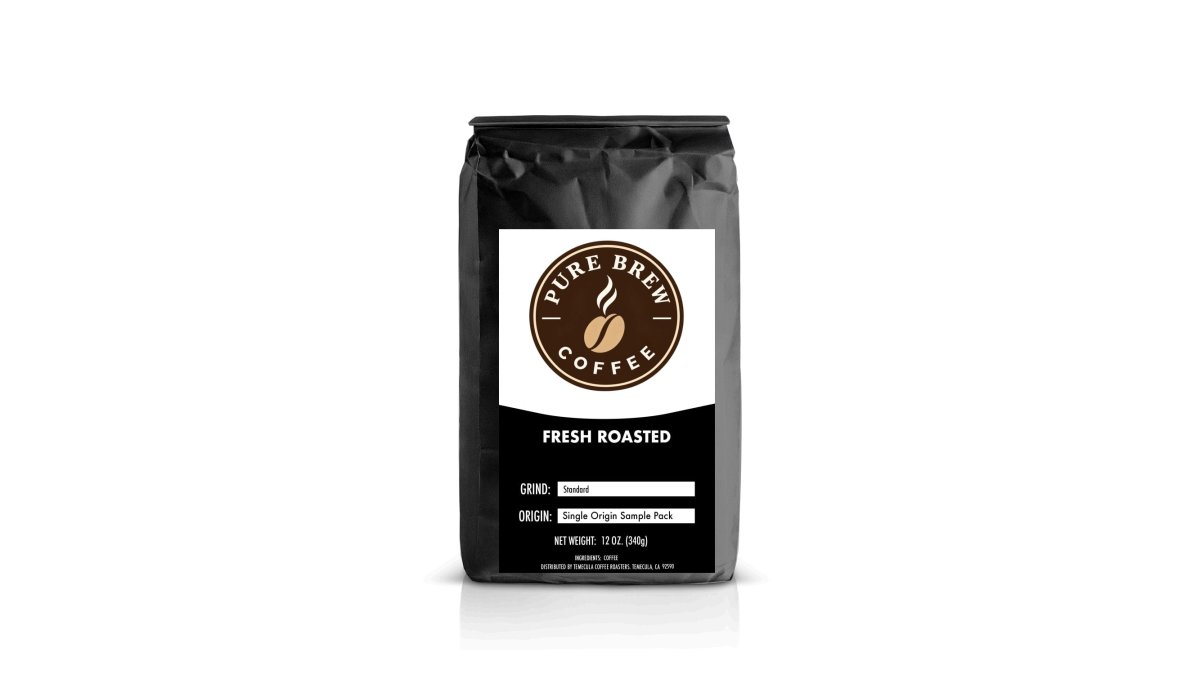
The price reflects this transparency. At $24.99 per sample pack or single-origin bag, Pure Brew Coffee sits at the premium end because direct relationships cost more than commodity sourcing. With no middleman absorbing margin, the cost goes to farmer compensation and documented environmental practices.
Fair Trade Coffee Subscription Options
Fair Trade certification is coffee's most recognizable ethical label, and its most misunderstood.
What Fair Trade does well is create a verifiable floor: an audited minimum price plus a premium the co-op votes on how to spend, typically on infrastructure, equipment, or community projects.
What Fair Trade does not do is guarantee quality, single-farm traceability, or a price high enough to lift a grower out of poverty. The floor is not a living income, and certification says nothing about roast date, freshness, or post-origin handling.
A layered approach separates strong subscriptions from weak ones.
When evaluating a Fair Trade coffee subscription, ask three questions:
- Is the certification current and specific? A bag that says "fair trade" without a certifier name, license number, or current audit date is unverifiable. Look for the Fair Trade USA mark or a named certifier on the packaging or product page.
- Does the roaster disclose the price paid? Certification alone tells you a floor was met; disclosure tells you whether the roaster went beyond it. A product-page paragraph naming the cooperative and price paid is the single most useful ethical signal a subscription can offer.
- Is the relationship long-term or transactional? A roaster buying from the same cooperative for five years has a different impact than one buying a single lot once. Multi-year relationships let cooperatives plan, invest, and hire.
Many specialty roasters combine Fair Trade certification on some origins with direct trade on others. Not automatically a red flag, direct trade can pay more than the floor, but the ethical story varies by bag. If consistency matters, favor subscriptions applying the same sourcing standard across their lineup.
Pure Brew Coffee's sourcing emphasizes documented farmer relationships, transparent pricing, and environmental stewardship. Not every origin carries formal certification, but direct trade and producer compensation are key considerations, and sourcing details are published on each product page so you can verify the claim yourself.
When evaluating a Fair Trade coffee subscription, ask whether certification is the floor or the ceiling: does the service stop at meeting requirements, or push further with direct relationships and documented impact?
Organic Coffee Subscription Choices
Organic certification means coffee was grown without synthetic pesticides, herbicides, or fertilizers under USDA National Organic Program standards.
Organic certification is not the same as ethical sourcing. A farm can be certified organic and still pay workers poorly; a roaster can sell certified organic coffee sourced through a commodity importer with no traceability to a named grower.
Where organic does carry real weight is environmental health. Synthetic inputs degrade soil, contaminate water, and expose farmworkers to chemicals.
The cost is real and structural. Organic production requires more labor for weed and pest management, and yields can drop during the transition years before soil biology recovers.
Flavor is separate. Organic certification does not predict taste: some organic coffees taste different because the farming system changes plant development, while others are indistinguishable from conventional beans of the same origin and process.
When evaluating an organic coffee subscription, use these checks:
- Look for the certifier, not just the word. "Organic" on a U.S. product should trace to a USDA-accredited certifying agent. A product page naming the certifier is more credible than one that just uses the word.
- Check whether organic is paired with sourcing disclosure. The strongest subscriptions tell you both the farming standard and the grower. Organic plus traceability beats either alone.
- Compare cost per serving, not cost per bag. Organic beans often come in smaller bags at higher prices. Divide the bag price by the cups you actually brew to compare fairly against conventional options.
- Ask what happens in the transition years. A roaster that supports growers through the three-year organic transition, when yields drop and premiums are not yet available, does more for soil health than one that only buys already-certified lots.
Many roasters carry a mix: certified organic origins plus farms that grow organically without certification because paperwork and fees are prohibitive for smallholders. That second category isn't automatically less ethical, just less verifiable.
Single Origin Favorites Sample Pack →
Pure Brew Coffee's sourcing emphasizes sustainable practices aligned with organic principles. Several origins use natural processing (Ethiopia Natural) and eco-pulping (Costa Rica). Processing details are documented on each product page.
Coffee Subscription with Transparent Sourcing
Transparency is the foundation of ethical coffee. A subscription with transparent sourcing provides grower name, region, altitude, soil type, variety, and processing method for every bean, evidence of ethical commitment, not optional detail.
Transparent sourcing requires courage: naming the grower makes you accountable to them, publishing the price paid exposes you if it's insufficient, and documenting environmental impact leaves nowhere to hide shortcuts.
The Best Sellers Sample Pack demonstrates transparent sourcing across blends and single origins. Peru comes from Cooperativa Agricola de Servicios Norandino with documented altitude, soil type, and processing. Bali comes from smallholder farmers in Kintamani with hand-picked, wet-hulled processing details on every bag.

This transparency prevents greenwashing. A coffee subscription claiming ethical sourcing without documentation makes an unverifiable promise; transparency makes promises verifiable.
When evaluating a coffee subscription with transparent sourcing, check consistency across orders. Does it publish the same grower details, altitude, and processing method every time, or does the sourcing story change seasonally? Consistency signals genuine relationships; inconsistency may sacrifice ethics for cost.
Single-Origin Selection and Roast Variety
Single-origin coffee comes from one geographic region or farm. A subscription featuring single-origin selections lets you taste how terroir, soil, altitude, climate, and processing shape flavor. Single-origin beans cost more than blends because sourcing is specific and supply limited.
Roast level dramatically affects how single-origin character expresses itself. A light roast emphasizes the origin's natural acidity and fruit notes. A medium roast balances origin character with roasted flavors. A dark roast emphasizes body and caramel tones, sometimes obscuring origin characteristics.
Pure Brew Coffee offers single origins at multiple roast levels. Ethiopia Natural is a medium-light roast with milk chocolate, fruity, and caramel notes. Colombia is a medium roast with dried orange, berry, and chocolate. Kenya has bright acidity, orange, lemon, and floral notes.

The subscription model reveals how roast level changes your perception of origin. Trying the same origin at different roasts shows which roast style you prefer and which origins suit your brewing method.
| Origin | Roast Level | Tasting Profile | Best Brewing Method |
|---|---|---|---|
| Ethiopia Natural | Med-light | Milk chocolate, fruity, caramel | Pour-over, AeroPress |
| Colombia | Medium | Dried orange, berry, chocolate | Espresso, French press |
| Peru | Medium | Salted caramel, silky sweet, citrus | Espresso, pour-over |
| Kenya | Light-medium | Bright acidity, orange, lemon, floral | Pour-over, filter |
| Bali Blue | Med-dark | Dark chocolate, molasses, brown sugar | French press, espresso |
Pricing, Frequency, and Commitment
Pure Brew Coffee's pricing is straightforward: $24.99 per single-origin bag or sample pack, with no subscription lock-in, minimum orders, or hidden shipping fees.
Sample packs ($24.99 for 2oz portions) let you discover multiple origins without committing to full bags: the Single Origin Favorites pack includes six origins, while the Best Sellers pack includes house blends and popular single origins.
Committed subscribers ordering individual bags ($24.99 each) at their preferred frequency build a relationship with specific origins. Many establish a rotation: one origin for weekday brewing, another for weekend exploration. A weekly bag costs roughly $25.
The ethical premium is real: transparent-sourced coffee costs more than commodity beans, and a subscription emphasizing direct relationships and documented environmental practices will cost more than price-first services.
| Commitment Level | Frequency | Monthly Cost | Best For |
|---|---|---|---|
| Discovery | Monthly sample pack | $25 | Exploring origins and roast levels |
| Regular | 2-4 bags monthly | $50-100 | Established preferences, consistent supply |
| Deep dive | 1 bag weekly | $100+ | Origin enthusiasts, multiple brewing methods |
Ethical coffee subscriptions demand more than marketing language: transparency about growers, documented environmental practices, and honest pricing that reflects the actual cost of ethical sourcing.
Pure Brew Coffee delivers this through direct relationships with named growers, documented sourcing information on every bag, and pricing that reflects compensation and sustainable practices. The Single Origin Favorites Sample Pack and individual single-origin selections at $24.99 each represent transparency.
If you're serious about ethical coffee, expect to pay more. That premium funds the relationships, documentation, and environmental stewardship that separate genuine ethical sourcing from certification theater.
Frequently Asked Questions
What makes an ethical coffee subscription different from a regular one?
Ethical coffee subscriptions prioritize transparent sourcing, direct relationships with growers, and fair compensation. They disclose grower names, farm locations, altitude, processing methods, and soil types, not just flavor profiles. Pure Brew's Single Origin Favorites Sample Pack ($24.99) includes detailed sourcing information for each coffee, from specific regions and cooperatives to the exact altitude and processing technique, so you know exactly where your coffee comes from and how growers are treated.
How can I verify that a coffee subscription is actually ethically sourced?
Look for subscriptions that name their growers, provide altitude and region details, and explain their processing methods. Transparency about producer relationships is key. Pure Brew lists grower names (such as Smallholder farmers from Medellin or Cooperativa Agricola de Servicios Norandino), soil types, and full processing details for each coffee. This level of detail signals genuine commitment to traceability and ethical practices rather than generic 'fair trade' claims without verification.
What's the difference between Fair Trade and organic coffee subscriptions?
Fair Trade certification ensures producers receive a minimum price and fair working conditions, while organic means the beans are grown without synthetic pesticides or fertilizers. Both support ethical practices, but they address different concerns, Fair Trade focuses on economics and labor, organic on environmental impact. Many ethical coffee subscriptions, including Pure Brew's offerings, work directly with small-scale growers using sustainable methods.
How much should I expect to pay for an ethical coffee subscription?
Premium ethical coffee typically costs $20-30 per pound or per subscription shipment. Pure Brew's sample packs are $24.99 each, offering multiple single-origin coffees to explore. This price reflects the actual cost of direct trade relationships, small-batch roasting, and transparent sourcing, significantly higher than mass-market coffee.
Can I choose my roast level and delivery frequency with an ethical coffee subscription?
Yes. Pure Brew offers a range of roast levels, light, medium, medium-dark, and dark, across its single-origin and blend offerings. The Sample Packs ($24.99) let you explore multiple roasts and origins before committing to a subscription. Once you find your preferences, you can select specific coffees and adjust delivery frequency to match your consumption rate.