

Table of Contents
- What Is a Single Origin Coffee Subscription?
- Single Origin vs. Blend Coffee Subscriptions: Key Differences
- How to Choose the Right Single Origin Subscription for Your Brewing Method
- Coffee Subscription Frequency Guide: Finding Your Ideal Delivery Schedule
- Pure Brew's Single Origin Favorites Sample Pack: Start Your Exploration
- How to Store Coffee Beans for Maximum Freshness
- Transparency and Sourcing: What Ethical Single Origin Means
- Frequently Asked Questions
Last Updated: October 2, 2026
What Is a Single Origin Coffee Subscription?
A single origin coffee subscription delivers whole bean coffee from one specific geographic region or farm directly to your door on a regular schedule.
The appeal lies in traceability and flavor complexity. When you know exactly where your coffee comes from, you understand the altitude at which it was grown, the soil composition, the processing method used, and often the names of the farmers who produced it. This transparency matters to coffee enthusiasts who want to taste the terroir, the distinct characteristics imparted by climate, elevation, and local farming practices.
Pure Brew Coffee specializes in curated single origin selections. Each origin tells a story through its tasting notes: a Colombian coffee might deliver dried orange and chocolate, while an Ethiopian natural process bean brings milk chocolate and fruity caramel notes. Single origin coffee subscriptions remove the guesswork from your morning ritual, delivering consistently excellent beans that highlight what makes each region unique.

Single Origin vs. Blend Coffee Subscriptions: Key Differences
The core difference between single origin and blend subscriptions comes down to flavor complexity and storytelling. Single origin coffees emphasize the distinct characteristics of one region's beans. Blended coffees combine beans from multiple origins to create a consistent flavor profile, often designed to highlight specific tasting notes or appeal to broader palates.
Single origin subscriptions appeal to coffee connoisseurs who want to explore how altitude, processing method, and varietal affect taste. A washed process Colombian coffee tastes different from a natural process Ethiopian, and a honey process Costa Rican bean offers yet another flavor dimension. With single origin, you're experiencing the terroir directly.
Blend subscriptions prioritize consistency and balance. A roaster might combine Brazilian beans for body and sweetness with Kenyan beans for brightness and acidity, creating a coffee that works well across multiple brewing methods.
| Aspect | Single Origin | Blend |
|---|---|---|
| Flavor Profile | Unique to region; varies by harvest | Designed for consistency |
| Tasting Notes | Specific (e.g., "pear, floral, jasmine") | General (e.g., "balanced, smooth") |
| Processing Transparency | High; often documented | Varies by roaster |
| Best For | Flavor exploration; espresso extraction | Everyday brewing; consistency |
| Price Point | Often higher | Moderate to high |
Single origin coffees typically cost more per pound because they're sourced from specific microlots, small, carefully managed harvests from particular farms or cooperatives.
How to Choose the Right Single Origin Subscription for Your Brewing Method
Your brewing method shapes which single origin coffee will shine. Different roast levels and flavor profiles perform better with specific equipment and techniques.
Pour Over and Drip Brewing: These methods benefit from medium roast single origins with bright acidity and complex tasting notes. The extended contact time between water and grounds highlights subtle flavors.
Espresso: Espresso extraction requires beans with body and sweetness to cut through the intensity of the shot. Medium to medium-dark roasts work best.
French Press: This immersion method suits darker roasts and beans with lower acidity. A medium-dark roast like Bali Blue, with dark chocolate and molasses notes, won't taste thin or over-extracted in a French press.
Cold Brew: Cold brewing emphasizes sweetness and body while minimizing acidity. Medium to medium-dark roasts work best.
Coffee Subscription Frequency Guide: Finding Your Ideal Delivery Schedule
Frequency depends on how much coffee you drink, how many brewing methods you use, and how quickly you want to explore different origins.
Weekly Deliveries: For serious coffee enthusiasts who drink multiple cups daily and want to taste a new origin every week.
Bi-weekly Deliveries: The sweet spot for most home brewers.
Monthly Deliveries: Best for casual coffee drinkers or those who prefer to stick with one origin longer.
Subscription Flexibility: The best single origin coffee subscriptions let you pause, skip, or adjust frequency without penalty.
Consider your storage capacity too. Whole bean coffee stays fresh for 2-4 weeks after roasting if stored in an airtight container away from heat and light.
Pure Brew's Single Origin Favorites Sample Pack: Start Your Exploration
The Pure Brew Coffee Single Origin Favorites Sample Pack is designed for anyone new to single origin coffee or wanting to compare multiple origins without committing to full-size bags. At $24.99, it includes six 2-ounce samples of Pure Brew's most popular single origins, each representing a distinct flavor profile and processing method.
Single Origin Favorites Sample Pack →
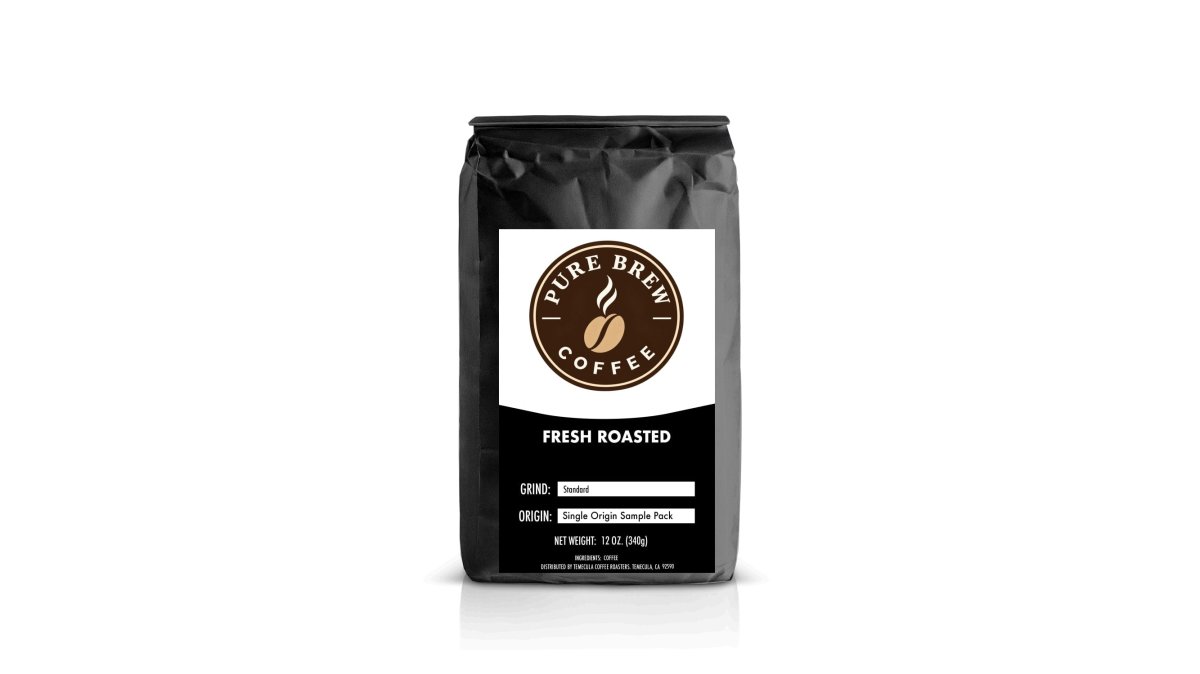
The sample pack includes Brazil Santos (medium roast, cocoa notes), Colombia (medium roast, dried orange and berry), Costa Rica (medium roast, sweet apple and honey), Ethiopia Natural (medium-light roast, milk chocolate and fruity caramel), Honduras (medium-dark roast, caramel and spice), and Tanzania (medium-light roast, pear and floral). Each 2-ounce sample makes approximately 2-3 cups of coffee, giving you enough to test the origin across your preferred brewing method.

This approach solves a real problem: committing to a full bag of a coffee you've never tried is risky. The sample pack lets you taste what Pure Brew means by "tasting notes" without waste.
The single origin favorites sample pack also serves as an entry point to subscription options. After exploring the samples, you'll know whether you prefer lighter, more acidic coffees or darker, fuller-bodied ones. You'll understand which growing regions produce flavors you return to.
How to Store Coffee Beans for Maximum Freshness
Freshness degrades quickly once whole bean coffee is exposed to oxygen, light, heat, and moisture. Proper storage extends the flavor complexity and tasting notes you paid for.
The Ideal Storage Environment: Keep whole bean coffee in an airtight container in a cool, dark place, ideally between 60-70°F.
Container Type Matters: An airtight ceramic or glass jar with a tight-sealing lid is ideal. Avoid clear containers that expose beans to light.
Timeline: Whole bean coffee peaks in flavor 3-7 days after roasting, when CO2 has released but the beans haven't begun to stale.
Grinding Timing: Grind immediately before brewing. Ground coffee oxidizes much faster than whole beans.
A single origin coffee subscription works best when you consume the coffee within 2-3 weeks of delivery.
Transparency and Sourcing: What Ethical Single Origin Means
"Ethical sourcing" and "direct trade" are terms used frequently in specialty coffee, but they mean different things. Understanding the distinction helps you choose a subscription aligned with your values.
Direct Trade: This means the roaster buys directly from farmers or cooperatives, cutting out intermediaries. Direct trade typically pays farmers 2-3 times the commodity price for coffee.
Fair Trade Certification: Fair trade is a third-party certification that ensures farmers receive a minimum price and that labor practices meet standards. It's more accessible than direct trade for smaller operations but involves less direct relationship between roaster and farmer.
Pure Brew Coffee emphasizes transparency in its sourcing. Each origin includes details: the grower's name or cooperative, the specific region and altitude, the soil type, and the processing method.
When evaluating a single origin coffee subscription, ask for specifics: Can you name the farm or cooperative? What's the altitude? How are the beans processed? These details separate genuine direct trade relationships from marketing claims.
Finding the best subscription for single origin coffee means matching your brewing method to the right flavor profile, understanding how processing and altitude shape taste, and choosing a roaster committed to transparency. Pure Brew Coffee's curated selection and detailed sourcing information make it an excellent starting point. Begin with the Single Origin Favorites Sample Pack to discover which origins resonate with your palate, then explore individual offerings like Colombia, Ethiopia Natural, or Kenya based on your brewing preferences. You'll develop a deeper appreciation for how geography, farming practices, and roasting decisions create the complexity you're seeking in every cup.

Frequently Asked Questions
What is a single origin coffee subscription?
A single origin coffee subscription delivers whole bean coffee from a specific growing region or farm directly to your home on a regular schedule. Unlike blends, each shipment features beans from one distinct origin, allowing you to experience the unique flavor profile shaped by that region's altitude, soil type, and processing method.
How often should I receive my coffee subscription?
Subscription frequency depends on your consumption rate and brewing method. Home brewers typically choose weekly, bi-weekly, or monthly deliveries. If you brew daily using pour over or espresso, a weekly or bi-weekly schedule keeps beans fresh at peak flavor. Monthly subscriptions work well for occasional drinkers or those with larger storage capacity.
What's the difference between single origin and blend coffee subscriptions?
Single origin subscriptions deliver beans from one specific region, preserving distinct flavor characteristics tied to that origin's growing conditions and processing method. Blends combine beans from multiple origins to create balanced, consistent flavor profiles. Single origin beans offer more complexity and terroir expression, making them ideal for specialty equipment like espresso machines or pour over setups where you can taste the nuances. Blends prioritize consistency and are forgiving across different brewing methods.
How do I store coffee beans to keep them fresh longer?
Store whole beans in an airtight container away from direct sunlight, heat, and moisture. A cool, dark pantry is ideal; avoid refrigerators and freezers, which introduce moisture and odors. Whole beans stay fresh for 2-4 weeks after roasting if stored properly. Grind beans immediately before brewing to preserve volatile aromatics and flavor compounds.
What should I look for in a single origin coffee subscription?
Prioritize transparency about sourcing, roast date, and processing method. Look for subscriptions that identify specific farms or cooperatives, altitude, and varietals, since these factors directly influence flavor. Check roast profiles match your brewing equipment: lighter roasts suit pour over and Aeropress, while espresso and French press handle medium to dark roasts better. Verify freshness by confirming roast dates are recent. Pure Brew's Single Origin Favorites Sample Pack at $24.99 lets you explore six distinct origins before committing to a full subscription, so you can identify your preferred flavor profiles and roast levels.