

Table of Contents
- Best Coffee Beans for Home Espresso: Quick Comparison
- 1. 6 Bean Blend: The Everyday House Espresso
- 2. Italian Roast: The Best Dark Roast Coffee Beans for Espresso
- 3. African Espresso: Bright, Fruity, and Complex
- 4. Single-Origin Picks: Bali Blue, Brazil Santos, Honduras, and Sumatra
- 5. Arabica vs. Robusta for Espresso: What the Blend Actually Does
- 6. How to Dial In Espresso Beans: Dose, Grind, and Yield
- 7. Best Espresso Beans for Cappuccino and Milk-Based Drinks
- Frequently Asked Questions
Last Updated: October 18, 2026
Best Coffee Beans for Home Espresso: Quick Comparison
The best coffee beans for home espresso are the ones that match your machine, your grinder, and how you actually drink your coffee. At Pure Brew Coffee, we built our lineup around that idea: every bag is $24.99 and every origin is traceable. Below is our ranked shortlist, followed by the dialing-in advice most guides skip.
| Pick | Roast Level | Flavor Profile | Best For |
|---|---|---|---|
| 6 Bean Blend | Dark | Chocolate, balanced, rich | Everyday espresso |
| Italian Roast | Darkest | Intense, bittersweet | Dark roast lovers |
| African Espresso | Medium-Dark | Fruity, bright, complex | Light-roast drinkers |
| Bali Blue | Medium-Dark | Dark chocolate, molasses | Single-origin sipping |
| Brazil Santos | Medium | Cocoa, smooth | Milk drinks |
| Honduras | Medium-Dark | Caramel, brown sugar | Sweet espresso |
| Sumatra | Medium | Earthy, syrupy | Heavy body |
| Decaf Espresso | Dark | Chocolate, full-bodied | Evening shots |
| Blonde | Light-Medium | Sweet, fruit-forward | Sweet espresso |
| Latin American Blend | Medium-Dark | Nutty, cocoa | Crowd-pleaser shots |
1. 6 Bean Blend: The Everyday House Espresso
Most home setups need one bag that forgives small mistakes. Our 6 Bean Blend is that bag: a dark roast house blend built from coffees around the world, priced at $24.99. It pulls a thick crema and holds up whether you drink it straight or with milk.

Pros: Forgiving across grind sizes, consistent shot to shot, excellent value. Cons: Dark roast masks delicate origin character, so single-origin fans may want more nuance.
2. Italian Roast: The Best Dark Roast Coffee Beans for Espresso
If you want the best dark roast coffee beans for espresso, start here. Italian Roast is our darkest offering, a slow-roasted blend of specialty-grade Arabica and Robusta at $24.99. The Robusta adds body and crema stability, which matters on entry-level machines.

Pros: Huge body, thick crema, cuts through milk. Cons: Bittersweet and low in acidity, so it is not for fruit-forward palates.
3. African Espresso: Bright, Fruity, and Complex
Kenyan, Tanzanian, and Ethiopian coffees make up this medium-dark blend, and the cup shows it: fruity acidity, layered sweetness, a finish that keeps moving. It is the pick for anyone bored with chocolate-forward espresso.
Pros: Complex and lively, stands out as straight shots. Cons: Bright acidity can taste sharp if you under-extract it.
4. Single-Origin Picks: Bali Blue, Brazil Santos, Honduras, and Sumatra
Single-origin coffee lets one place speak for itself, and for home espresso that means each bean behaves differently in the basket. The four below are all $24.99 and all roast-dated, but they reward different setups and different drinks. Treat the notes as starting points, then adjust grind and dose to your machine.
Bali Blue: Dark Chocolate and Molasses
Grown by smallholders in the Kintamani highlands, Bali Blue is a medium-dark roast with dark chocolate, molasses, and brown sugar in the cup. It is the most balanced of the four single origins: enough body for a straight shot, enough sweetness to survive a splash of milk.
Pros: Balanced, sweet, forgiving for a single origin. Cons: The molasses sweetness can read as flat if you over-extract.
Brazil Santos: Smooth Cocoa for Milk Drinks
Brazil Santos is a medium roast with cocoa and a smooth, nutty finish. It is the mildest of the group and the easiest to recommend for cappuccino and latte drinkers, because its cocoa notes blend into steamed milk instead of fighting it.
Pros: Smooth, milk-friendly, wide extraction window. Cons: Low acidity means it can taste one-dimensional as a straight shot.
Honduras: Caramel and Brown Sugar
Sourced from Marcala growers, Honduras is a medium-dark roast with caramel, brown sugar, and a touch of spice. It sits between Bali Blue and Brazil Santos: sweeter and more aromatic than Santos, less heavy than Bali Blue. It shines as a straight espresso and holds up in a cortado.
Pros: Sweet, aromatic, versatile across drink styles. Cons: Less body than the darker roasts, so it can thin out at long yields.
Sumatra: Earthy, Syrupy Body
Sumatra is a medium roast with earthy, herbal notes, dried fruit, and a syrupy body. It is the heaviest of the four single origins and the closest to a traditional dark-roast mouthfeel without the char. If you like thick, low-acidity shots and drink them straight, start here.
Pros: Heavy body, low acidity, distinctive earthy profile. Cons: The herbal edge is polarizing, and it is the least forgiving of grind errors.
How to Choose Among the Four
- Straight shots, balanced: Bali Blue.
- Milk drinks: Brazil Santos.
- Sweet and versatile: Honduras.
- Heavy and earthy: Sumatra.
A practical note on single origins versus blends: single-origin Arabica trades some crema stability for clarity. If you want flavor nuance and are willing to dial in, a single origin delivers more of the place in the cup.
5. Arabica vs. Robusta for Espresso: What the Blend Actually Does
Arabica vs. Robusta for espresso comes down to balance. Arabica brings sweetness, acidity, and complexity; Robusta brings body, crema, and a bitter edge. Blends like our Italian Roast combine both deliberately. Single-origin Arabica, like our Bali Blue, trades some crema stability for clarity.
The takeaway: if your shots collapse or crema vanishes fast, a blend with some Robusta is the easier fix. If you want flavor nuance, go Arabica.
6. How to Dial In Espresso Beans: Dose, Grind, and Yield
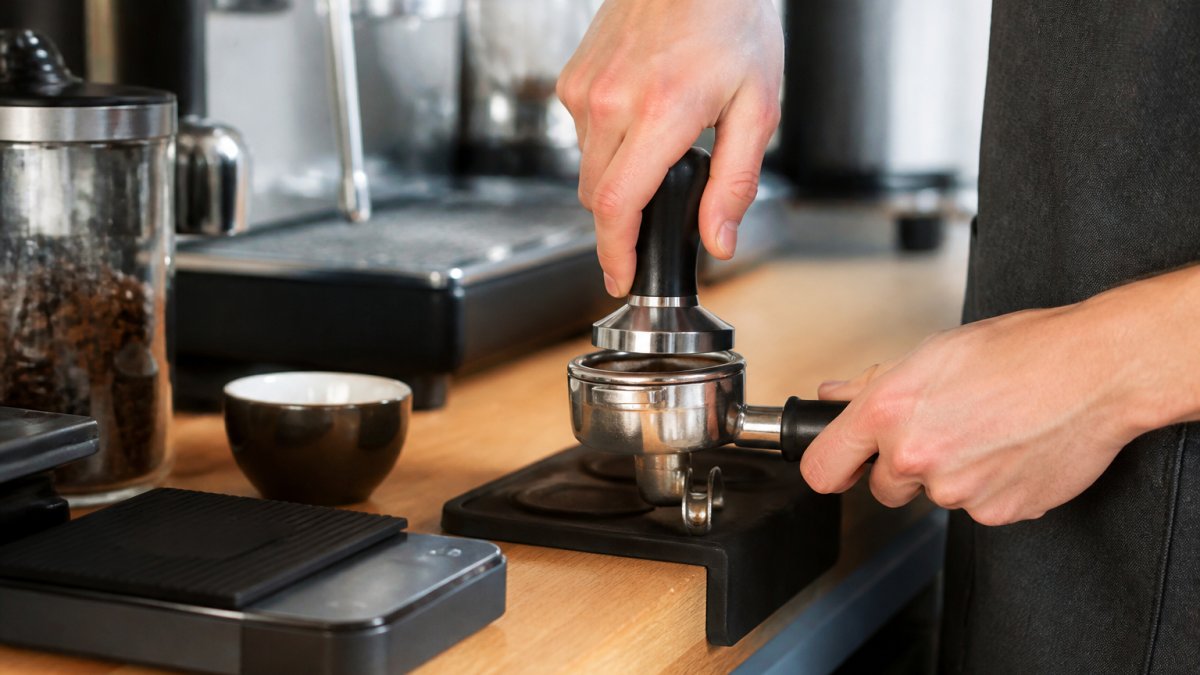
Learning how to dial in espresso beans is a repeatable loop, not guesswork. Start with a dose around 18 grams, aim for a yield near 36 grams, and target a brew time of 25 to 30 seconds. Then adjust one variable at a time:
- Sour or thin shot? Grind finer.
- Bitter or harsh shot? Grind coarser.
- Shot runs too fast? Increase dose slightly.
- Shot runs too slow? Decrease dose or coarsen grind.
Start With Freshness, Not the Recipe
The single biggest variable in home espresso is how fresh the beans are. A bag roasted two days ago and a bag roasted six weeks ago will need different grind settings for the same recipe.
A common pattern among home baristas is to rest beans for about 5 to 10 days after the roast date before pulling espresso. Check the roast date on the bag, not a "best by" date, and treat the roast date as the start of your clock.
Storage That Preserves Flavor
- Keep beans whole until you brew. Pre-ground coffee stales in hours, not weeks.
- Store in an airtight container away from light and heat, ideally in a cool cupboard rather than next to the machine.
- Skip the freezer for daily-use bags. Repeated thawing introduces moisture. If you must freeze, freeze a sealed bag once and grind from frozen.
- Buy in quantities you will finish in about two to four weeks so you are always brewing within the roast-date window.
A Repeatable Starting Recipe for Any New Bag
When you open a new bag, run this sequence before you judge the coffee:
- Lock your dose. Use the same dose you used for the last bag (for example, 18 grams) so the only new variable is the coffee.
- Set a baseline grind. Start at the grind setting that worked for a similar roast level, then adjust.
- Weigh your yield. Aim for roughly a 1:2 ratio (18 grams in, about 36 grams out) as a starting point.
- Time the shot. Target 25 to 30 seconds. If it runs faster, grind finer; if it runs slower, grind coarser.
- Taste, then adjust one thing. Sour means under-extracted: grind finer or raise the yield slightly. Bitter means over-extracted: grind coarser or lower the yield.
- Write it down. Note the bean, roast date, dose, grind setting, yield, and time so you can repeat the shot tomorrow.
Match the Recipe to Your Grinder
Your grinder sets the ceiling on how far you can dial in. A burr grinder with fine, repeatable adjustments lets you chase small changes; a blade grinder or a stepped entry-level grinder may only let you move in coarse jumps, so lean on dose and yield to fine-tune instead of grind. If your grinder cannot make the shot run slower without choking, increase the dose slightly; if it cannot make the shot run faster, decrease the dose or shorten the yield.
When to Change the Recipe, Not the Bean
If a bag tastes sour no matter how fine you grind, the roast may be too light for your palate. If it tastes bitter no matter how coarse you grind, the roast may be too dark for your taste. In both cases, the fix is a different bean, not more dialing. Use the recipe above to give each bag a fair trial, then let your palate decide.
7. Best Espresso Beans for Cappuccino and Milk-Based Drinks
The best espresso beans for cappuccino need enough body and sweetness to survive milk. Brazil Santos and Honduras are the standouts. For a darker, more traditional cappuccino, Italian Roast holds its own.

Pros: Sweet, rounded, milk-friendly profiles. Cons:
Frequently Asked Questions
Is Arabica or Robusta better for espresso?
Neither wins outright. Arabica brings sweetness, acidity, and layered flavor notes like chocolate, caramel, and fruit. Robusta adds body, crema stability, and a bitter edge that cuts through milk. Most espresso blends combine both, and Pure Brew Coffee's Italian Roast is a slow-roasted Arabica/Robusta blend built for that balance. If you drink straight shots and want clarity, lean Arabica. If you want thick crema and a cappuccino that holds its foam, a blend with some Robusta helps.
What is the 30-second rule for espresso?
The 30-second rule is a starting reference, not a law. A standard double shot of roughly 18 grams in and 36 grams out should take about 25 to 30 seconds. If it runs faster, grind finer. If it chokes and drips slowly, grind coarser. Darker roasts like Italian Roast often pull faster, while medium roasts like Brazil Santos may need a finer setting. Use the 30-second window as your baseline, then adjust by taste.
How long should coffee beans rest after roasting before making espresso?
Give freshly roasted beans 5 to 10 days of rest before pulling espresso. Check the roast date on the bag, not the best-by date, and store beans whole in an airtight container away from light and heat.
What roast level is easiest to use in a home espresso machine?
Medium and medium-dark roasts are the most forgiving on home equipment. Brazil Santos, a medium roast, and Honduras, a medium-dark, both fit that profile. Dark roasts like Italian Roast work well too. Start with a medium roast if you are new to dialing in.
How do I choose coffee beans for espresso with milk?
Pick beans bold enough to survive milk. Sumatra's syrupy body and dark chocolate notes, or the caramel and brown sugar in Honduras, are strong choices. For a sweeter, lighter milk drink, the Blonde blend is built for sweet espresso. Match the bean's intensity to your milk ratio: more milk needs a bolder bean.
Picking beans gets easier once you match roast to drink and blend to machine. Pure Brew Coffee roasts every bag for espresso, from the forgiving 6 Bean Blend to the fruit-forward African Espresso, all at $24.99 with freshness you can track. Join our newsletter for early access when we launch and be first to taste what we are building.