

Table of Contents
- Pour Over vs Automatic Drip Coffee Maker: Taste, Cost, and Control
- The Pour Over Coffee Brewing Ratio and Other Variables That Decide Your Cup
- The Learning Curve of Manual Brewing
- Cost Breakdown: Gear, Consumables, and Long-Term Value
- Physical Effort and Ergonomics of Manual Pour Over
- Environmental Impact: Filters, Waste, and Daily Footprint
- Fitting Pour Over Into Your Existing Morning Habits
- Frequently Asked Questions
Last Updated: September 25, 2026
Pour Over vs Automatic Drip Coffee Maker: Taste, Cost, and Control
If you're asking whether manual pour over coffee makers are worth it, the short answer is yes, for a specific kind of drinker. A manual pour over coffee maker is a brewing device that relies on you to heat water, control the pour, and manage timing, rather than a machine that automates those steps. At Pure Brew Coffee, we track how brewing method shapes what ends up in the cup, and the gap between manual and automatic is wider than most people expect.
Flavor Clarity and Extraction Perfection
Paper-filtered pour over produces a cleaner cup than automatic drip because the filter traps coffee oils and sediment that a metal basket or mesh screen lets through. That means less body, but far more flavor clarity. You taste the dried orange and berry notes in a medium roast instead of a blanket of heaviness.
Convenience and Daily Time Cost
An automatic drip machine wins on convenience, full stop. Load grounds, press start, walk away. A manual pour over demands your attention for the entire brew, typically three to four minutes of active pouring plus setup and cleanup.
The Pour Over Coffee Brewing Ratio and Other Variables That Decide Your Cup
The pour over coffee brewing ratio is the single biggest lever you control. A common starting point is roughly 1 gram of coffee to 16 grams of water, adjusted to taste. Get this wrong and no amount of technique rescues the cup.
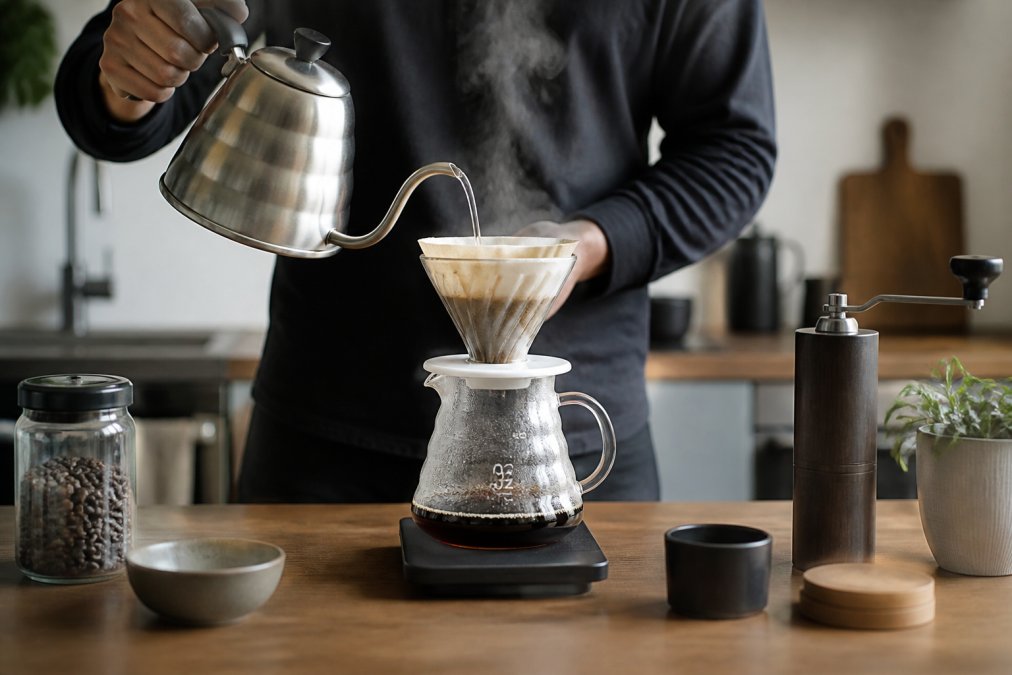
From there, four variables decide the outcome:
- Grind size consistency, uneven grounds cause channeling, where water finds the path of least resistance and under-extracts part of the coffee bed
- Brew time, most pour over recipes land between 2:30 and 4:00 total
- Agitation, how much you stir or swirl affects how evenly water contacts the grounds
- Bloom phase, the initial pour that lets trapped gas escape, usually 30 to 45 seconds
Water Temperature Stability and Flow Rate Control
Water temperature stability matters more than most beginners realize. The sweet spot sits between 195°F and 205°F. A gooseneck kettle gives you flow rate control, which is why it's the one piece of gear worth buying first.
The Learning Curve of Manual Brewing
Expect your first several cups to be mediocre. This is normal and it's the honest part most gear reviews skip. Manual brewing technique is a skill, and skills take repetition.
Cost Breakdown: Gear, Consumables, and Long-Term Value
The gear math favors manual brewing clearly. A basic cone dripper is a one-time purchase in the low tens of dollars, a gooseneck kettle is a one-time purchase, and a digital scale rounds out the kit. An automatic drip machine with comparable temperature control and a thermal carafe typically costs several times the dripper, and it carries parts that wear out.
- Paper filters are a recurring per-brew cost. A box of 100 cone filters runs roughly in the range of a few dollars to about ten dollars depending on brand and size, which works out to a few cents per cup. Brew two cups a day and you are looking at a few hundred filters a year, a small but real line item that never goes away.
- A permanent metal mesh filter is a one-time purchase, usually in the range of a single box of premium paper filters or a bit more. After that, the per-cup consumable cost drops to zero. The trade-off is a different cup: more coffee oils and sediment pass through, giving heavier body and less clarity.
- Reusable cloth filters sit between the two. They cost more than paper per unit, need rinsing and periodic replacement, and produce a cup closer to paper than to metal.
| Cost Category | Manual Pour Over | Automatic Drip |
|---|---|---|
| Upfront gear | Low (dripper + kettle + scale) | Higher (machine with temp control) |
| Per-cup consumables | Paper filters (recurring) or $0 with metal mesh | Paper filters (recurring) |
| Replacement parts | Rare; kettle and dripper last years | Heating elements, carafes, seals |
| Control over variables | Full | Limited |
| Daily time investment | 3-4 minutes active | Near zero |
Physical Effort and Ergonomics of Manual Pour Over
Manual labor is real here, and it's the angle most comparisons ignore. Pouring from a kettle requires a steady wrist and a stable stance. For anyone with wrist, shoulder, or grip limitations, a full manual pour can be genuinely uncomfortable.
Environmental Impact: Filters, Waste, and Daily Footprint
Most comparisons wave at sustainability without separating the two waste streams. Manual pour over and automatic drip fail in different ways, and the honest answer depends on which stream you weight more.
Manual pour over, paper filters:
- Every brew generates one paper filter plus the spent grounds. Paper filters are typically compostable, and used coffee grounds are a genuinely useful compost addition, they add nitrogen and organic matter. In a home compost or municipal organics program, the daily waste stream is close to zero.
- The catch is packaging. Individually wrapped filter packs, plastic sleeves, and non-compostable filter blends undercut the benefit. Buying filters in bulk cardboard boxes rather than single-serve packs is the single biggest lever here.
- The kettle and dripper are durable goods. A gooseneck kettle and a ceramic or plastic cone can last years, so the embodied manufacturing footprint is amortized across thousands of brews.
Manual pour over, metal mesh filter:
- Nothing is thrown away per brew. The only recurring waste is the spent grounds, which compost. The filter itself needs rinsing after every use and occasional deep cleaning, but it does not enter the waste stream.
- The trade-off is a heavier, less clarified cup, not an environmental one.
Automatic drip machine:
- The daily consumable is the same paper filter, so the filter waste stream is comparable to manual paper brewing.
- The difference is the machine. An automatic drip brewer draws electricity for the heating element and, on many models, a warming plate that stays on after the brew finishes. That standby and warming draw is the environmental cost manual brewing avoids entirely.
- Machines also generate plastic and electronic waste over time: cracked carafes, failed heating elements, worn seals, and eventually the whole unit. Those parts are rarely recycled and often not repairable, so the embodied footprint recurs with each replacement.
The honest comparison:
- If you brew with paper and compost, manual pour over's daily footprint is a compostable filter and grounds, plus no standby electricity.
- If you brew with a metal mesh filter, the per-brew waste drops to grounds only.
- An automatic machine matches the filter stream but adds ongoing electricity draw and a recurring parts-replacement stream that manual gear does not have.
Fitting Pour Over Into Your Existing Morning Habits
For beans that reward the effort, a single-origin medium roast like our Brazil Santos shows the cocoa notes and smooth body that a clean extraction is built to reveal. The Ethiopia Natural, with its milk chocolate and caramel profile, is the kind of coffee that makes the ritual feel earned rather than fussy.


Frequently Asked Questions
Does pour over coffee taste better than drip?
It can, but it depends on your variables. Pour over gives you direct control over water temperature, flow rate, and agitation, which lets you dial in extraction perfection for a specific bean. Automatic drip machines often run water too hot or unevenly, which can flatten flavor clarity. A medium roast like Pure Brew's Brazil Santos, with its smooth cocoa notes, shows the difference clearly when brewed at the right ratio in a pour over.
What pour over coffee brewing ratio should I start with?
Start with 1:16, meaning one gram of coffee to 16 grams of water. For a standard 12-ounce mug, that's about 22 grams of coffee and 355 grams of water. Adjust from there: a 1:15 ratio gives a stronger cup, 1:17 a lighter one. Weigh your coffee on a digital scale rather than using scoops, since grind size consistency and dose accuracy matter more in pour over than in a drip machine.
How long does manual pour over brewing take?
A single cup takes about three to four minutes from the moment you start pouring, including the bloom phase. Add two minutes for heating water and grinding beans. That's roughly five to six minutes total, compared to about one minute of hands-on time with an automatic drip maker. The trade-off is manual labor and attention versus the control that produces a better cup.
Is pour over coffee worth the extra time in the morning?
It depends on what you value. If you drink one or two cups a day and care about flavor clarity, body, and acidity, the four-minute brew is a small cost for a noticeably better result. If you're brewing for a household or rushing out the door, an automatic drip machine wins on convenience. Many people use both: pour over on slow mornings, drip on busy ones.
The real question isn't whether manual pour over coffee makers are worth it in the abstract. It's whether you want control badly enough to spend four minutes earning it every morning. If the answer is yes, the gear pays for itself and the cup rewards the attention. Pure Brew Coffee is preparing to launch with meticulously sourced single-origin offerings, and our newsletter gives you early access when we do. Join to be among the first to taste what the ritual is for.