

Table of Contents
- Why Proper Coffee Storage Matters for Freshness and Flavor
- 1. Airtight Containers: Limiting Oxygen Exposure
- 2. Cool, Dark Storage Locations: Pantry and Cupboard Solutions
- 3. Protecting Beans from Direct Sunlight and Light Exposure
- 4. How Long Do Coffee Beans Stay Fresh: Roast Date and Shelf Life
- 5. Freezing Coffee Beans for Extended Storage
- Common Coffee Bean Storage Mistakes to Avoid
- Storage Guide for Artisanal and Freshly Roasted Beans
- Frequently Asked Questions
Last Updated: October 8, 2026
Why Proper Coffee Storage Matters for Freshness and Flavor
How you store artisanal coffee beans determines whether you're tasting vibrant, nuanced flavors or stale, muted bitterness. The moment roasted beans leave the roastery, they begin losing freshness. Oxygen, heat, light, and moisture are the enemies. Your job is to slow that decline as much as possible.
Proper storage decisions separate enthusiasts who savor their beans from those who waste premium purchases. A single-origin Ethiopian Natural or a med-dark Bali Blue costs $24.99 per bag. Proper storage extends that 2-4 week freshness window. Careless storage collapses it to days.

The stakes are higher with artisanal beans than commodity coffee. Single-origin lots have limited harvests. Pure Brew Coffee sources from specific microclimates and small-holder farmers. Once that batch is gone, it's gone. You're not buying a fungible commodity; you're buying a time-specific product from a specific place. That makes storage technique worth learning.
Below, we'll show you exactly how to store artisanal coffee beans at home using seven proven methods. Each approach has trade-offs. Some prioritize maximum freshness over convenience. Others balance ease with decent preservation. We'll walk through airtight containers, cool dark locations, freezing protocols, and the specific mistakes that destroy beans fastest.
1. Airtight Containers: Limiting Oxygen Exposure
Oxygen is the primary enemy of fresh coffee. It oxidizes the oils and compounds that give roasted beans their complexity and aroma. The longer beans sit exposed to air, the faster they stale.
An airtight container is your first line of defense. The goal is simple: eliminate air contact without introducing new problems like condensation or temperature swings.
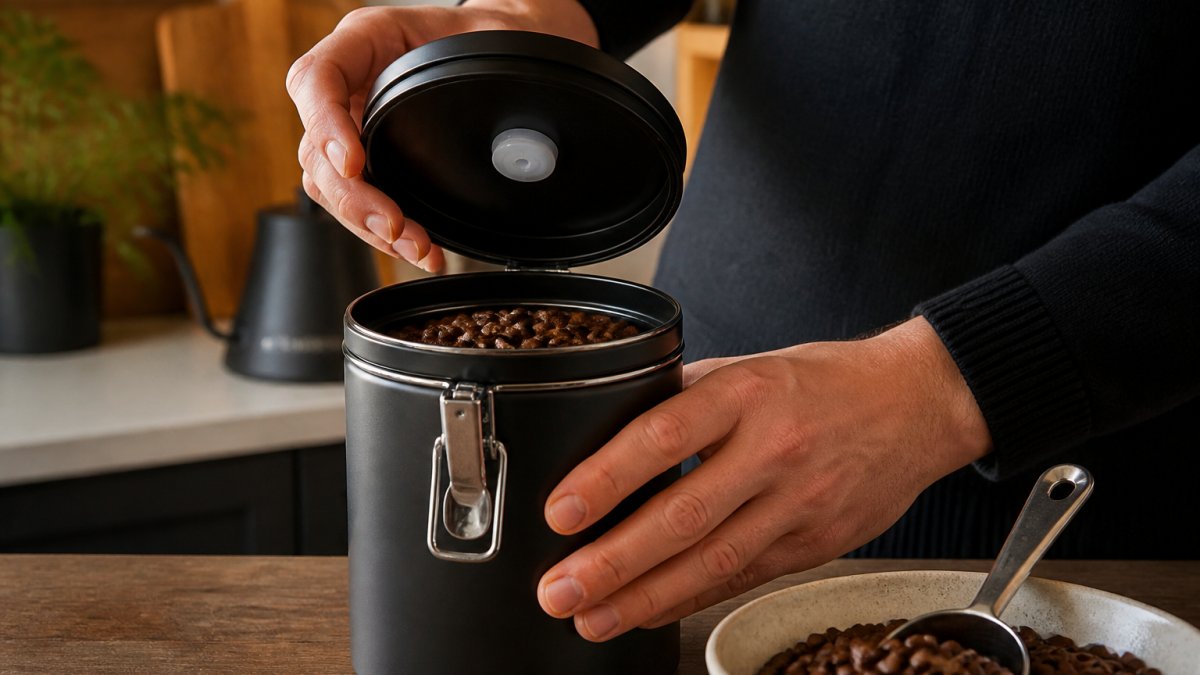
The best containers have these features:
- Opaque material (blocks light)
- Airtight seal (one-way valve or gasket)
- One-way degassing valve (lets CO2 out without letting oxygen in)
- Durable construction (resists repeated opening/closing)
A one-way valve is critical for freshly roasted beans. Roasted coffee releases CO2 for the first 7-10 days after roasting. If that gas has nowhere to escape, pressure builds and the seal fails.
Avoid clear glass or plastic containers. Light exposure accelerates staling, even if the container is airtight. Avoid mason jars without a one-way valve, they trap CO2 and can pop open as pressure builds. Avoid bags with no seal at all.
The trade-off: airtight containers work well for beans you'll consume within 2-4 weeks. They're convenient to open and reseal. They don't require freezer space. But they don't extend freshness beyond that window significantly.
2. Cool, Dark Storage Locations: Pantry and Cupboard Solutions
Temperature stability matters as much as airtight sealing. Heat accelerates the staling process. Fluctuating temperatures cause condensation, which introduces moisture, another major enemy of bean freshness.
The ideal storage location is cool (around 60-70°F), dark, and away from appliances that generate heat. A kitchen pantry or cupboard works well if it's not above or near the stove, oven, or refrigerator. A bedroom closet is even better because it stays darker and cooler.
Avoid these locations:
- Above the stove or oven (heat rises and damages beans)
- Near a window (sunlight exposure)
- On the counter (exposed to light and temperature swings)
- Above the refrigerator (heat from the compressor)
- In direct sunlight (UV light degrades flavor compounds)
Room temperature storage in a cool, dark place keeps beans fresher longer than warm environments. If your kitchen runs hot or gets direct afternoon sun, pantry storage becomes critical.
The trade-off: a cool, dark cupboard works fine for beans consumed within 2-4 weeks. Beyond that window, even in ideal conditions, flavor degradation accelerates. The location alone can't preserve beans indefinitely, you need the airtight container AND the cool location working together.
3. Protecting Beans from Direct Sunlight and Light Exposure
Sunlight and artificial light both damage coffee beans. UV rays break down the compounds that create aroma and flavor. Even a few hours of direct sunlight can noticeably flatten a cup's profile.
This is why roasters ship beans in opaque bags. It's why Pure Brew Coffee uses dark, sealed packaging for all single-origin offerings like our Robusta or Guatemala beans. The packaging protects the product during transit and storage.

Once beans reach your home, light exposure becomes your responsibility. A clear glass container on your kitchen counter looks nice. It also guarantees faster staling. Opaque containers, ceramic, stainless steel, or dark glass, keep light out.
For cupboard or pantry storage, this is less critical since those spaces are naturally dark. But if you're storing beans on open shelving or in a visible location, opaque is non-negotiable.
The practical reality: most home kitchens have some ambient light. Fluorescent overhead lights, LED bulbs, and even indirect sunlight penetrate further than people expect. An opaque container sitting on a shelf gets far less light exposure than a clear one, even in the same location.
4. How Long Do Coffee Beans Stay Fresh: Roast Date and Shelf Life
Freshness is time-bound. It starts declining the moment beans cool from roasting. The question isn't whether beans go stale, they do. The question is how fast, and how you slow it.
Most specialty roasters print the roast date on the bag. This is your baseline. Beans taste best 7-14 days after roasting, after degassing is complete but before oxidation accelerates. You can enjoy them for 2-4 weeks if stored properly.
This timeline assumes ideal storage: airtight container, cool dark location, no temperature swings. Real-world conditions vary. A bean stored in a cool pantry lasts longer than one left on a counter. A frozen bean lasts months.
The practical window for artisanal beans is tight. When you buy single-origin beans from Pure Brew Coffee at $24.99, you're paying for freshness and origin specificity. That investment only pays off if you consume the beans within their prime window.
If you find yourself with beans nearing the end of their 4-week window, grind them. Ground coffee stales faster than whole beans, but if the whole beans are already losing flavor, grinding and freezing what you don't use immediately is a reasonable triage move.
5. Freezing Coffee Beans for Extended Storage
Freezing is the only method that significantly extends the freshness window beyond 4 weeks. Cold temperature dramatically slows oxidation and staling. Frozen beans can stay fresh for 2-3 months, sometimes longer.
The catch: freezing introduces condensation risk. When you remove beans from the freezer and they warm to room temperature, moisture condenses on the surface. That moisture accelerates staling and can introduce off-flavors.
To freeze beans properly:
Portion before freezing. Divide beans into small amounts you'll use in one brewing session (about 2 weeks' worth). Freeze each portion separately in an airtight container or vacuum-sealed bag.
Use airtight, opaque containers. Freezer bags work if you remove as much air as possible before sealing. Glass jars with tight gaskets work better. Vacuum-sealed bags are ideal.
Thaw without opening the container. When you need beans, remove the container from the freezer and let it sit at room temperature for 15-20 minutes before opening. This allows the temperature to equalize and minimizes condensation forming on the beans themselves.
Never refreeze. Once thawed, beans should be stored in the refrigerator or a cool cupboard, not returned to the freezer. Repeated freeze-thaw cycles damage flavor.
The trade-off: freezing extends shelf life significantly, but adds complexity. You need multiple small containers. You need to plan ahead and portion beans. If you open a container and expose beans to condensation, you've lost some freshness.
Common Coffee Bean Storage Mistakes to Avoid
Most people harm their beans without realizing it. Here are the mistakes that destroy freshness fastest.
Storing beans in the refrigerator. This is the single most common mistake. The refrigerator is humid and subject to temperature swings every time you open the door. Moisture condenses on beans.
Buying too much at once. Buying a full pound of artisanal beans to save money defeats the purpose. A pound of specialty coffee sits in storage for 4-6 weeks.
Leaving beans in the original bag without resealing. Many roasters use bags with one-way valves. These bags are designed for storage. But once you open the bag, that seal is compromised.
Storing beans near heat sources. A cupboard above the stove, next to the oven, or above the refrigerator exposes beans to constant heat. Heat accelerates oxidation and staling dramatically.
Grinding beans in advance. Ground coffee has far more surface area exposed to oxygen. It stales in 2-3 days, not 2-4 weeks. Grind only what you'll brew within 24 hours.
Exposing beans to strong odors. Coffee absorbs odors. Store beans away from spices, garlic, onions, and other pungent foods. This is another reason a dedicated cupboard works better than open shelving.
Storage Guide for Artisanal and Freshly Roasted Beans
Freshly roasted beans require slightly different handling than beans that have been roasted for a week or more. Fresh beans are still degassing. They're also at peak flavor.
For the first 7-10 days after roasting, use an airtight container with a one-way valve. This lets CO2 escape without letting oxygen in. Store in a cool, dark place. Open the container minimally during this window.
After 10 days, beans have mostly finished degassing. This is when they hit their sweet spot for flavor complexity. Switch to standard airtight storage if you haven't already. Keep them in the cool, dark location.
At the 2-week mark, start thinking about consumption pace. If you have more than two weeks' worth of beans remaining, consider freezing a portion. This preserves your investment.
By week 4, beans are noticeably flatter.
| Storage Method | Freshness Window | Best For | Key Requirement |
|---|---|---|---|
| Airtight container, cool cupboard | 2-4 weeks | Regular consumption | Opaque, one-way valve |
| Vacuum-sealed portions, freezer | 2-3 months | Bulk buying or subscriptions | Remove air, thaw without opening |
| Original bag with reseal, cool location | 2-3 weeks | Fresh beans from roastery | Keep sealed between uses |
| Ground beans, airtight container | 2-3 days | Immediate brewing | Grind only as needed |
When you invest in artisanal beans, whether Pure Brew Coffee's single-origin offerings or any specialty roaster's work, storage determines whether you taste what the roaster intended. The Robusta from West Java, the med-dark Bali Blue, or the Ethiopia Natural from Sidama all have distinct flavor profiles.

Start with an airtight, opaque container. Add a cool, dark location. Keep beans away from heat, light, moisture, and strong odors. If you're buying in bulk, freeze portions. Grind only what you brew. These fundamentals preserve freshness and protect your investment.
Frequently Asked Questions
What is the best way to store coffee beans at home?
Store artisanal coffee beans in an airtight container in a cool, dark place like a pantry or cupboard, away from direct sunlight, heat, and moisture. Keep whole beans sealed to limit oxygen exposure and preserve the aromatic compounds that give specialty coffees like our single-origin offerings their distinctive character. The ideal temperature stays between 60-70°F. Avoid the refrigerator, as condensation damages flavor and aroma.
How long do coffee beans stay fresh after opening?
Whole coffee beans typically stay fresh for 2-4 weeks after opening when stored properly in an airtight container in a cool, dark place. Freshness peaks within the first 2 weeks of the roast date. Single-origin artisanal beans like our Ethiopia Natural or Colombia varieties are best consumed during this window to enjoy their full flavor profile. Check the roast date on your bag to track freshness and plan consumption accordingly.
Should I freeze coffee beans, and how do I prevent condensation?
Yes, freezing coffee beans extends storage life to 2-3 months when done correctly. Divide beans into small, airtight portions before freezing to prevent repeated thaw-freeze cycles that damage flavor. Keep frozen portions in an opaque, airtight container to block light. When ready to use, thaw a portion at room temperature for 1-2 hours before opening to prevent condensation from forming on the beans and compromising their taste.
What are the biggest mistakes people make when storing coffee beans?
Common storage mistakes include using clear containers that expose beans to light, storing in warm or humid locations like above the stove or in the refrigerator, leaving bags unsealed and exposed to air, grinding beans too far in advance, and storing near strong odors that flavor absorption can transfer. Keep ground coffee separate from whole beans, as ground coffee stales much faster.
Artisanal coffee deserves storage that matches its quality. When you're paying $24.99 for single-origin beans from Pure Brew Coffee, the difference between proper storage and careless storage is the difference between tasting the roaster's work and tasting stale beans. Get the basics right, airtight container, cool dark location, minimal air exposure, and you'll taste the full complexity these beans were roasted to deliver.